Factory Flow Simulation for Bottlenecks, Downtime, and Throughput
A 15-second, interactive factory flow simulation that shows how bottlenecks and downtime spread—and how AI coordination restores throughput under real variability.
Simulations and articles exploring how predictive load balancing distributes demand across systems before overload occurs. Traditional load balancing reacts to current system conditions, but predictive approaches use forecasting and historical patterns to anticipate demand spikes and adjust capacity proactively. This is commonly used in cloud infrastructure, digital platforms, logistics systems and service operations where sudden demand surges can degrade performance.
Simulation models help visualize how predictive algorithms redistribute traffic, workloads or service requests across resources to maintain system stability. These models illustrate how forecasting, capacity planning and automated coordination reduce downtime, improve response times and increase operational efficiency.
Predictive load balancing simulations are particularly useful for explaining system reliability, cloud infrastructure scaling, platform performance optimization and dynamic resource allocation in complex systems.
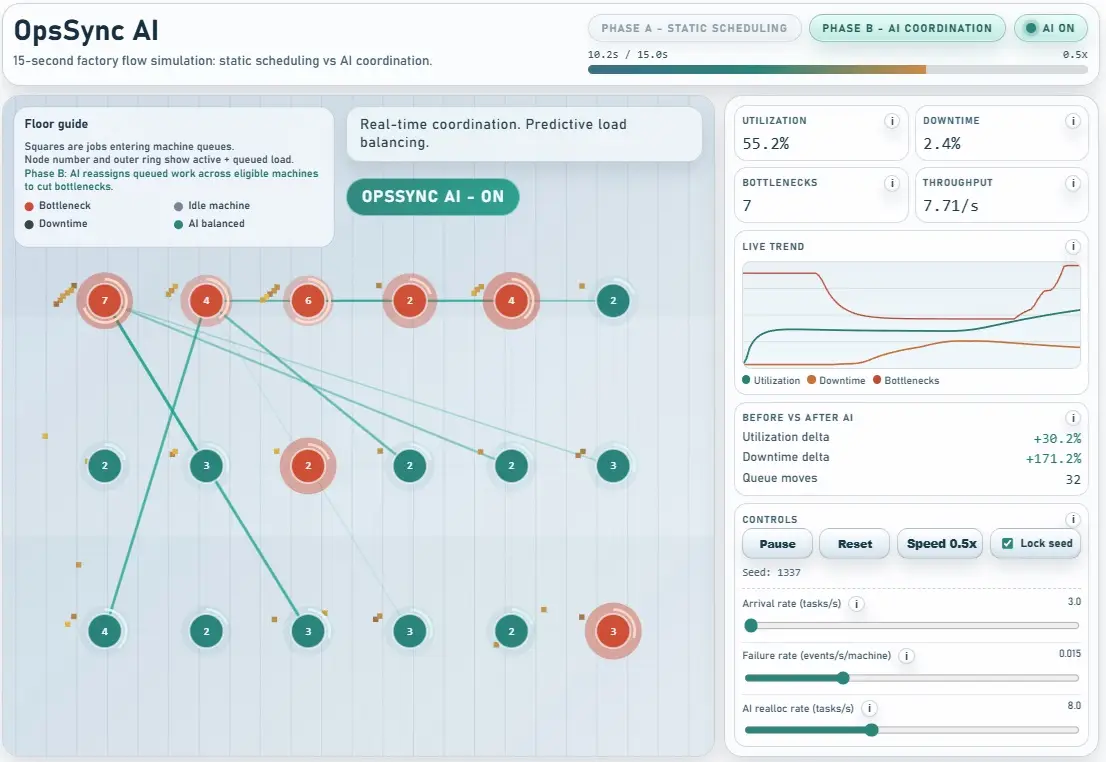
A 15-second, interactive factory flow simulation that shows how bottlenecks and downtime spread—and how AI coordination restores throughput under real variability.