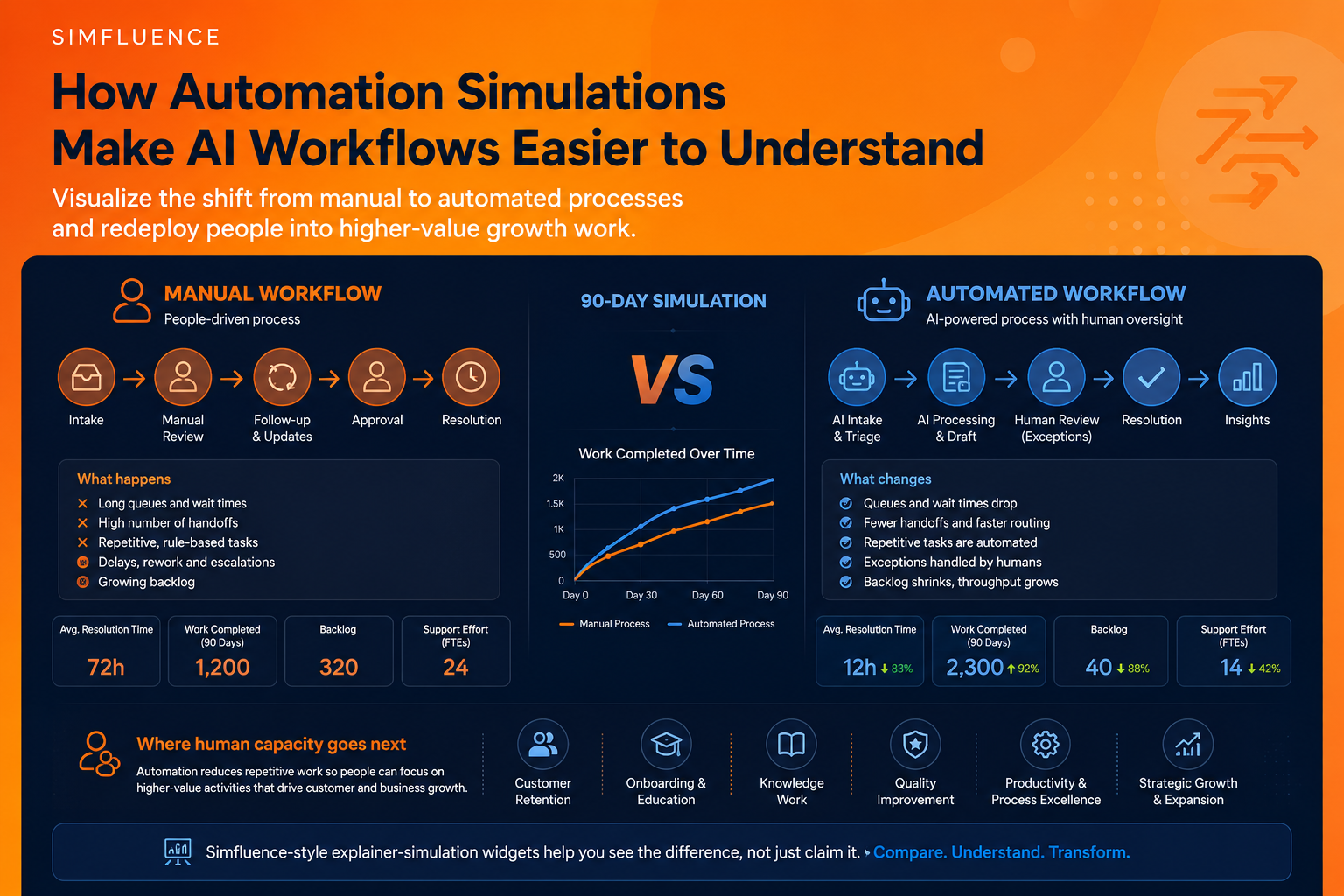
Infographic comparing a manual workflow with an automated workflow, showing how AI automation reduces queues, handoffs, delays and backlog while redeploying people into retention, onboarding, knowledge work, quality improvement and growth roles.

How Automation Simulations Make AI Workflows Easier to Understand

Automation is easier to trust when people can see how the workflow changes. This article explains how Simfluence-style explainer-simulation widgets compare manual and automated processes, visualize AI workflow automation, and show how human capacity can move from repetitive tasks into higher-value growth work.

Read more
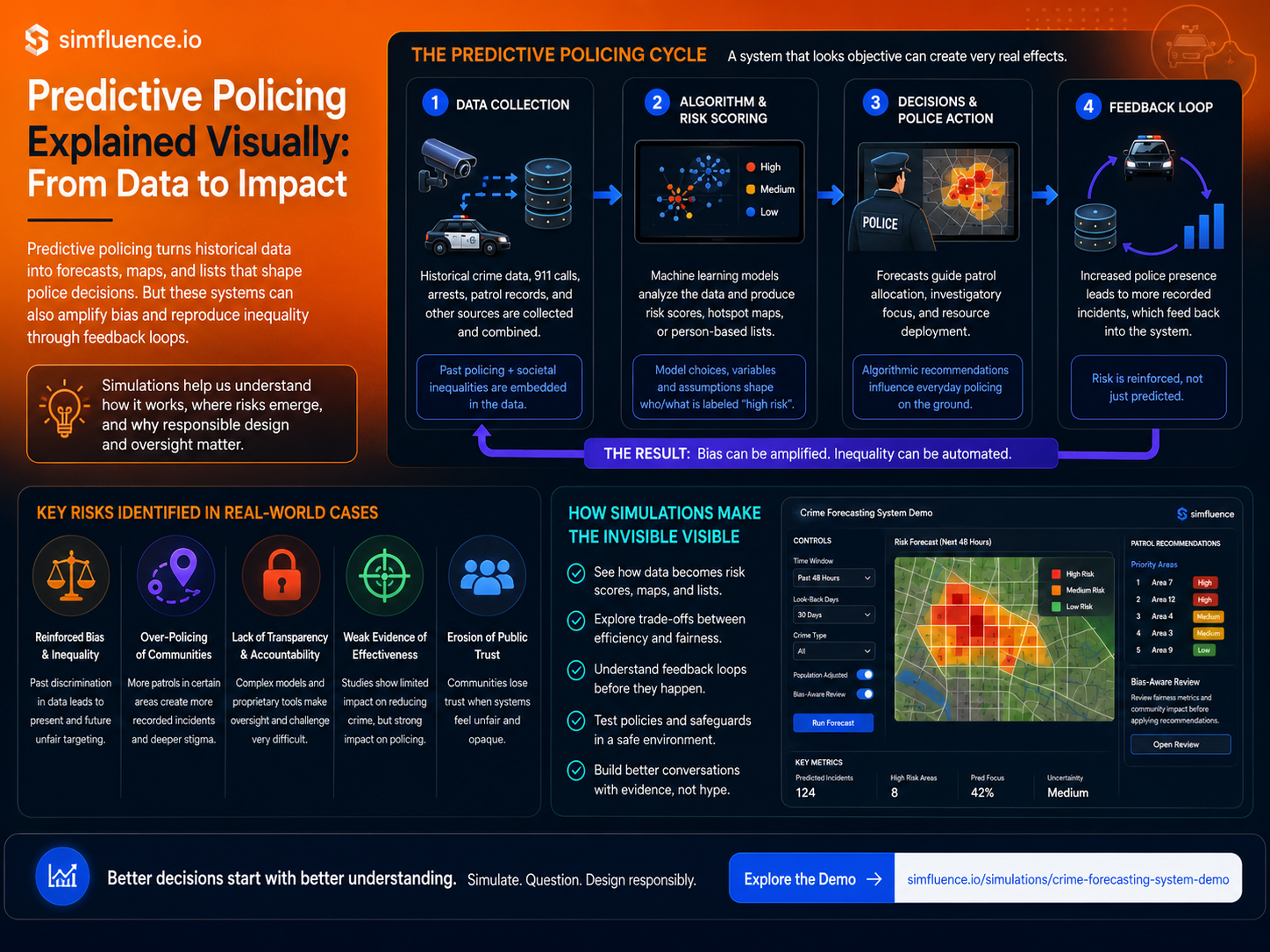
Simfluence-style infographic explaining predictive policing, showing how historical crime data becomes risk scores, patrol recommendations, and feedback loops that can amplify bias and inequality.

How Simulations Make Predictive Policing Easier to Understand

Predictive policing is not just a technical forecasting tool. It changes how institutions define risk, allocate attention, and act on data. This post shows how Simfluence-style simulations can make sensitive AI systems clearer by visualizing risk scores, patrol recommendations, feedback loops, and governance concerns.

Read more

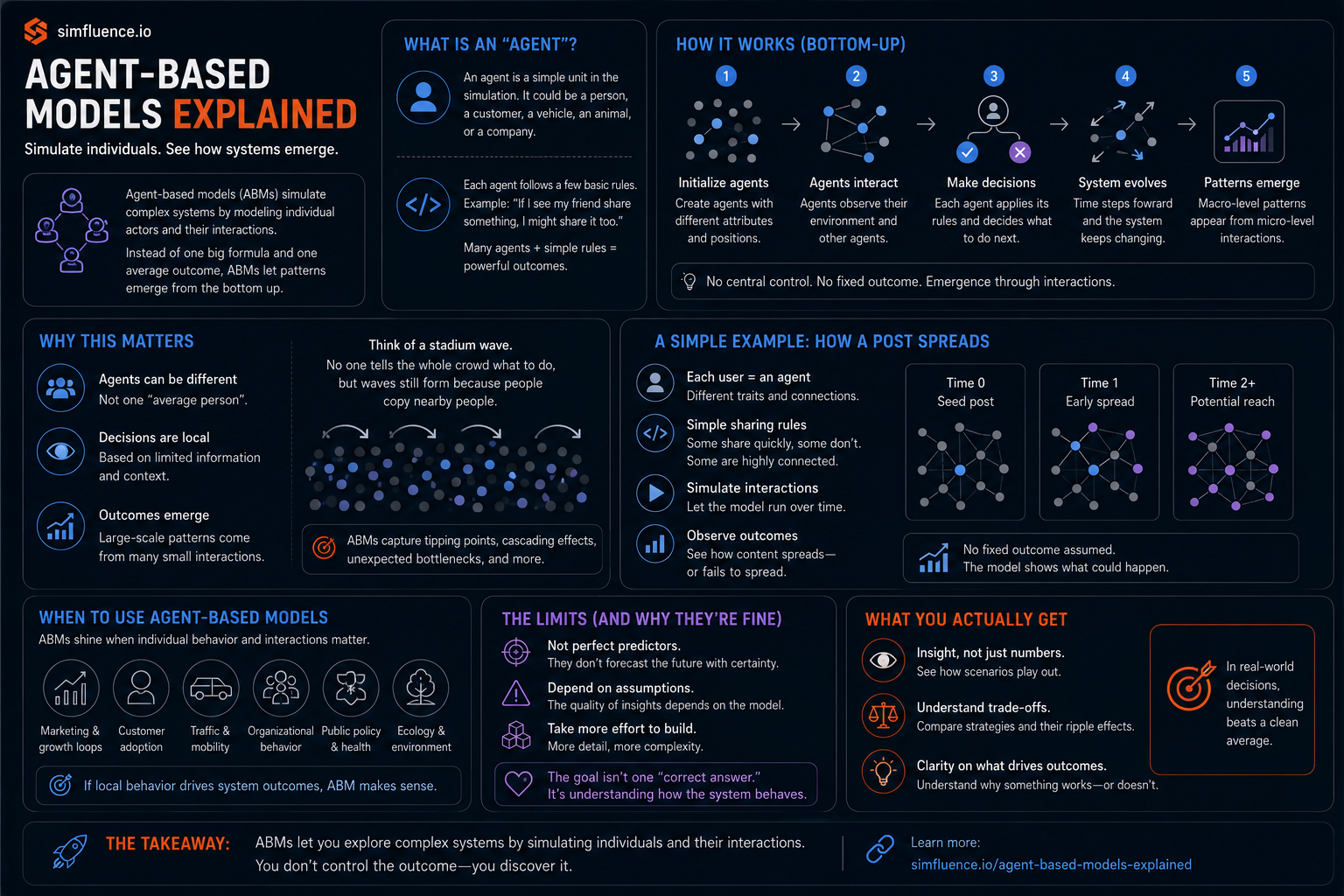
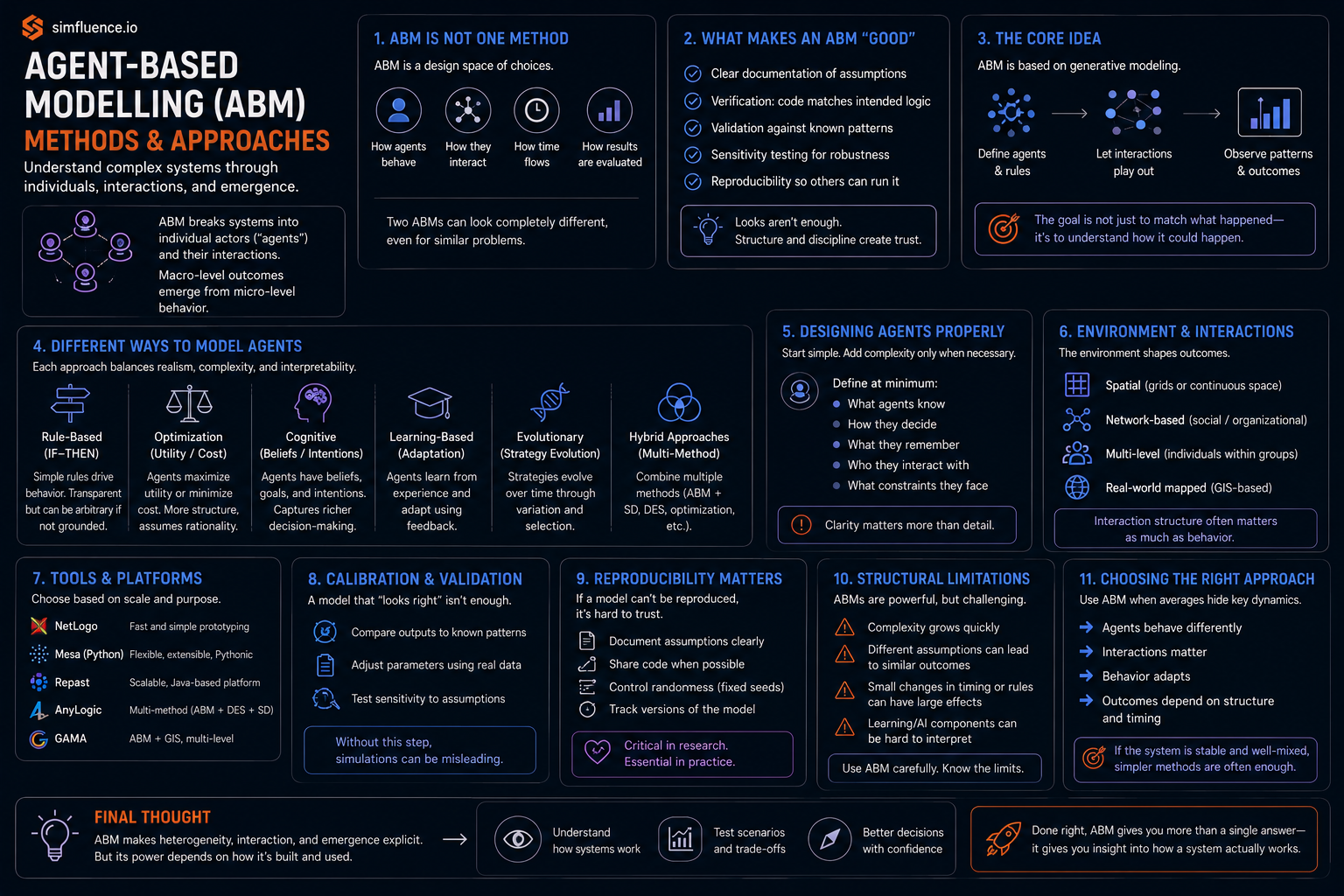
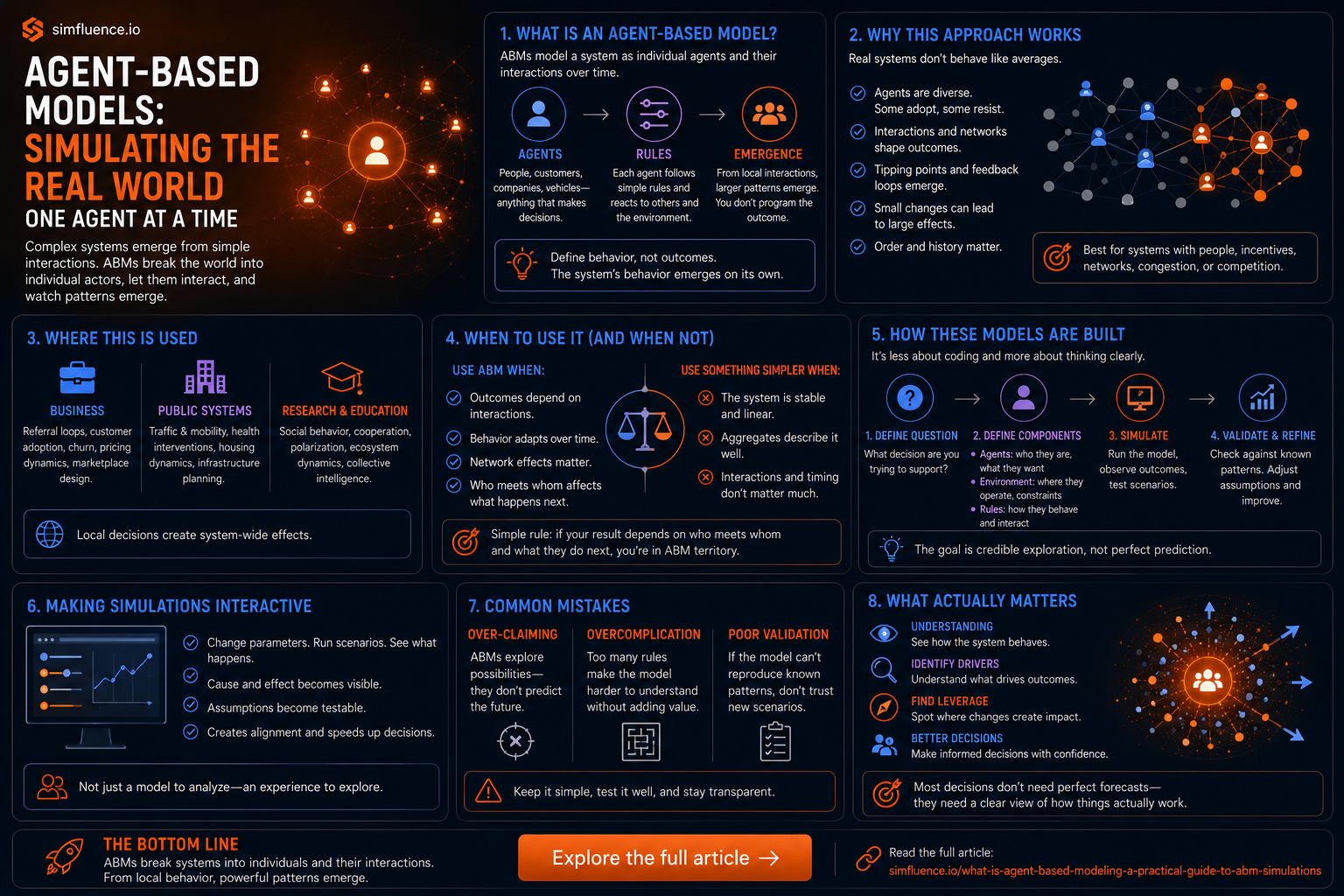
Agent-Based Models Explained

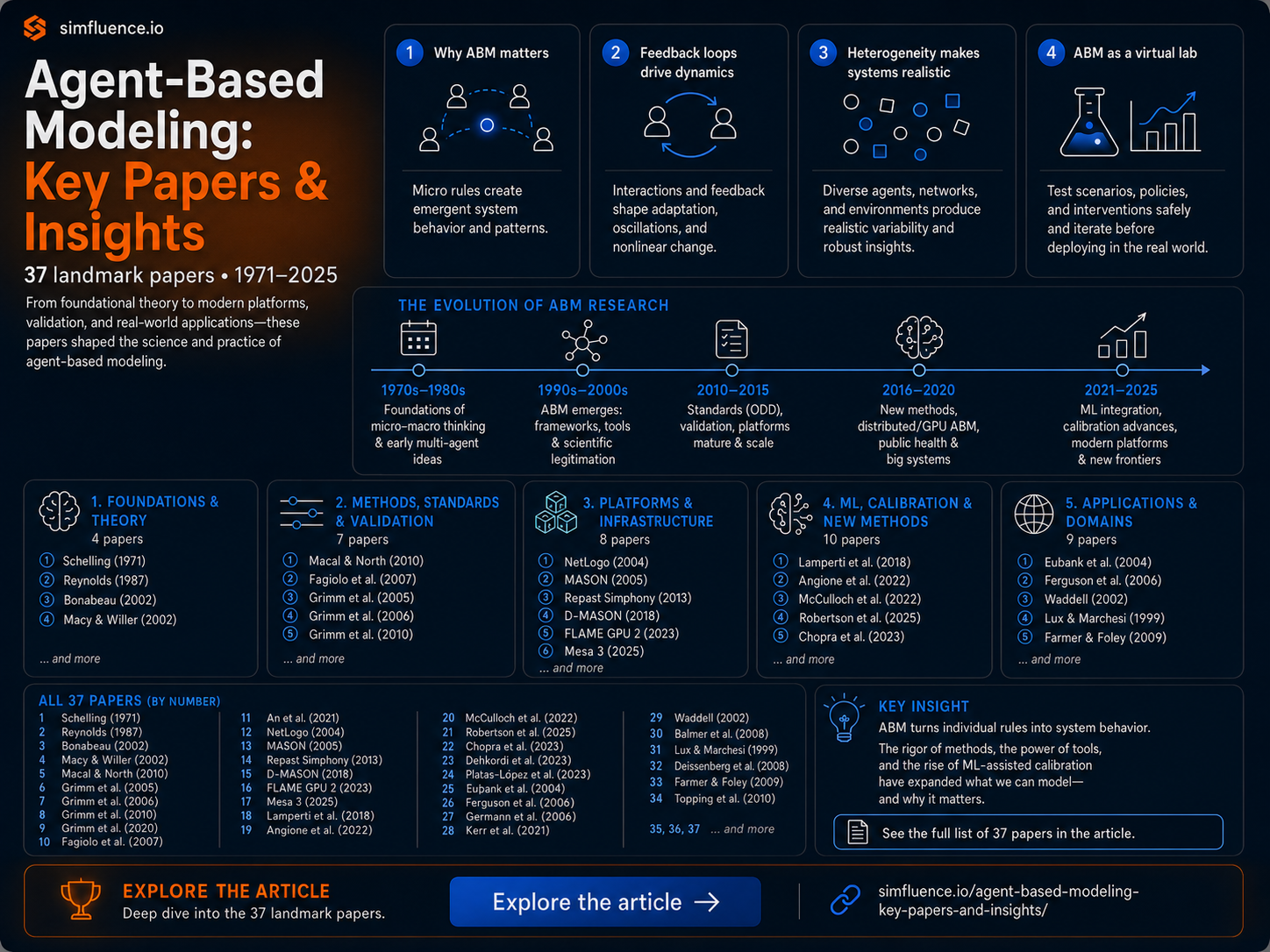
Agent-based models simulate complex systems by modeling individual actors and their interactions. This guide explains how they work with simple examples.

Read more
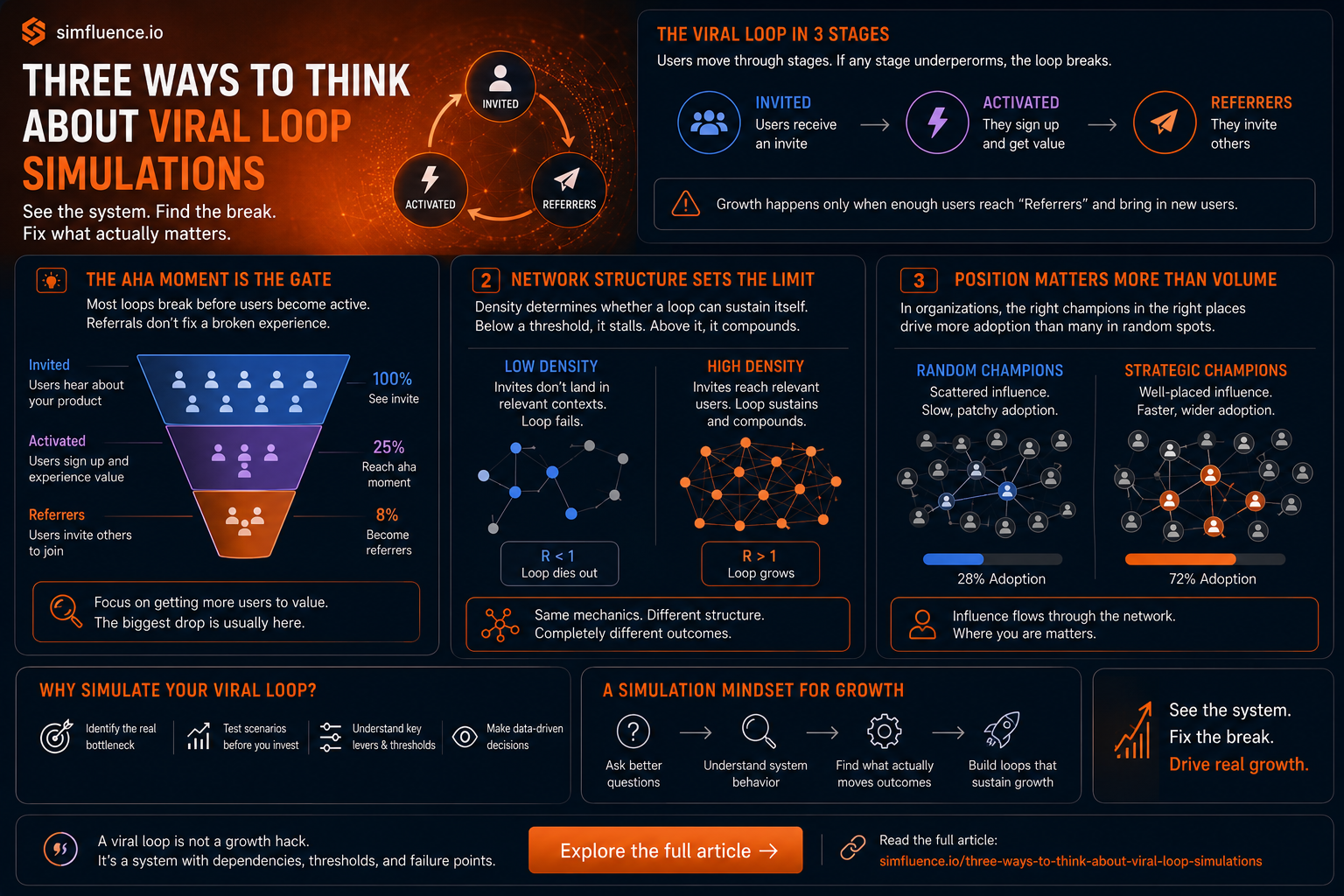
Three Ways to Think About Viral Loop Simulations

Three Ways to Think About Viral Loop Simulations

Viral growth is rarely magic. It’s math, behavior, and timing pretending to be luck. Below are three real client cases where we customized this viral loop simulation to answer concrete business questions. Company names and some details are anonymized, but the problems—and solutions—are very real.

Read more