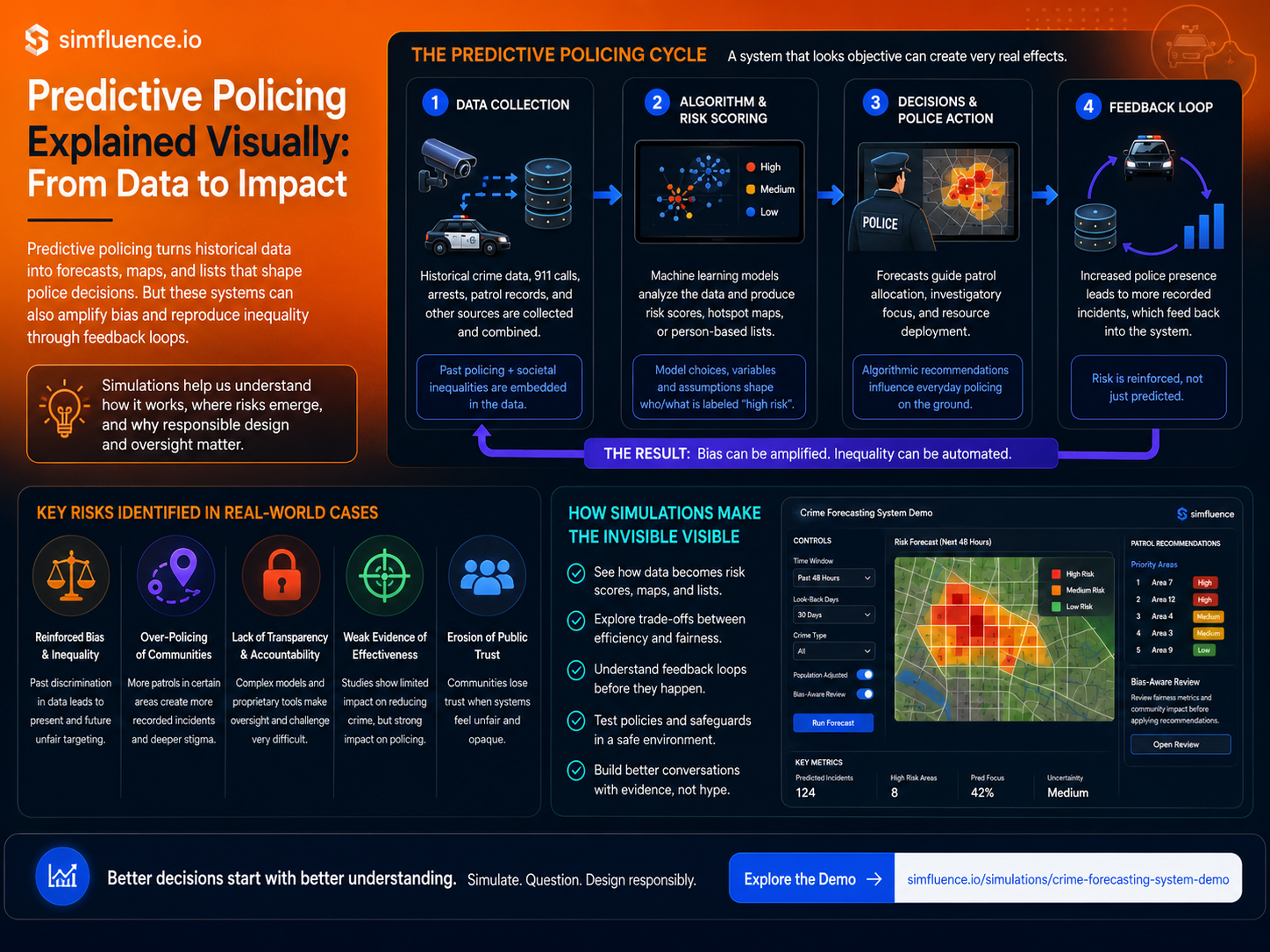
Predictive policing is often introduced with a simple promise: use data to forecast crime risk, allocate police resources more efficiently, and prevent harm before it happens. On the surface, this sounds reasonable. Public safety resources are limited. Crime is unevenly distributed across time and space. If data can help decision-makers understand where risk may rise, why not use it?
The problem is that predictive policing is not just a technical forecasting tool. It is a form of algorithmic governance. It changes how institutions see risk, how they allocate attention, and how certain places or groups become repeatedly marked as suspicious. This is the central lesson from research on predictive policing as datafication: when past police data is transformed into future risk scores, hotspot maps, or individual profiles, the system does not simply describe reality. It can start shaping it.
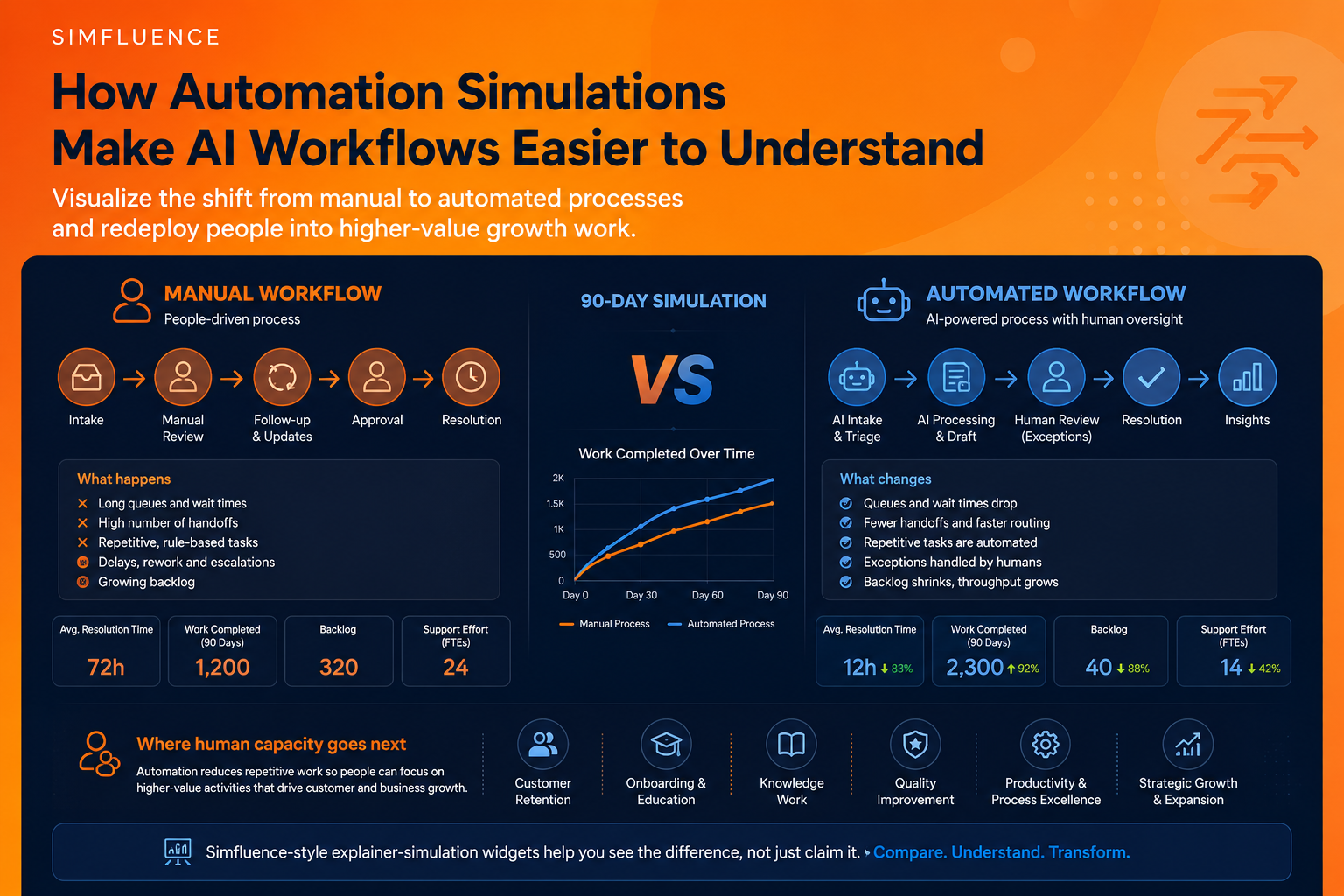
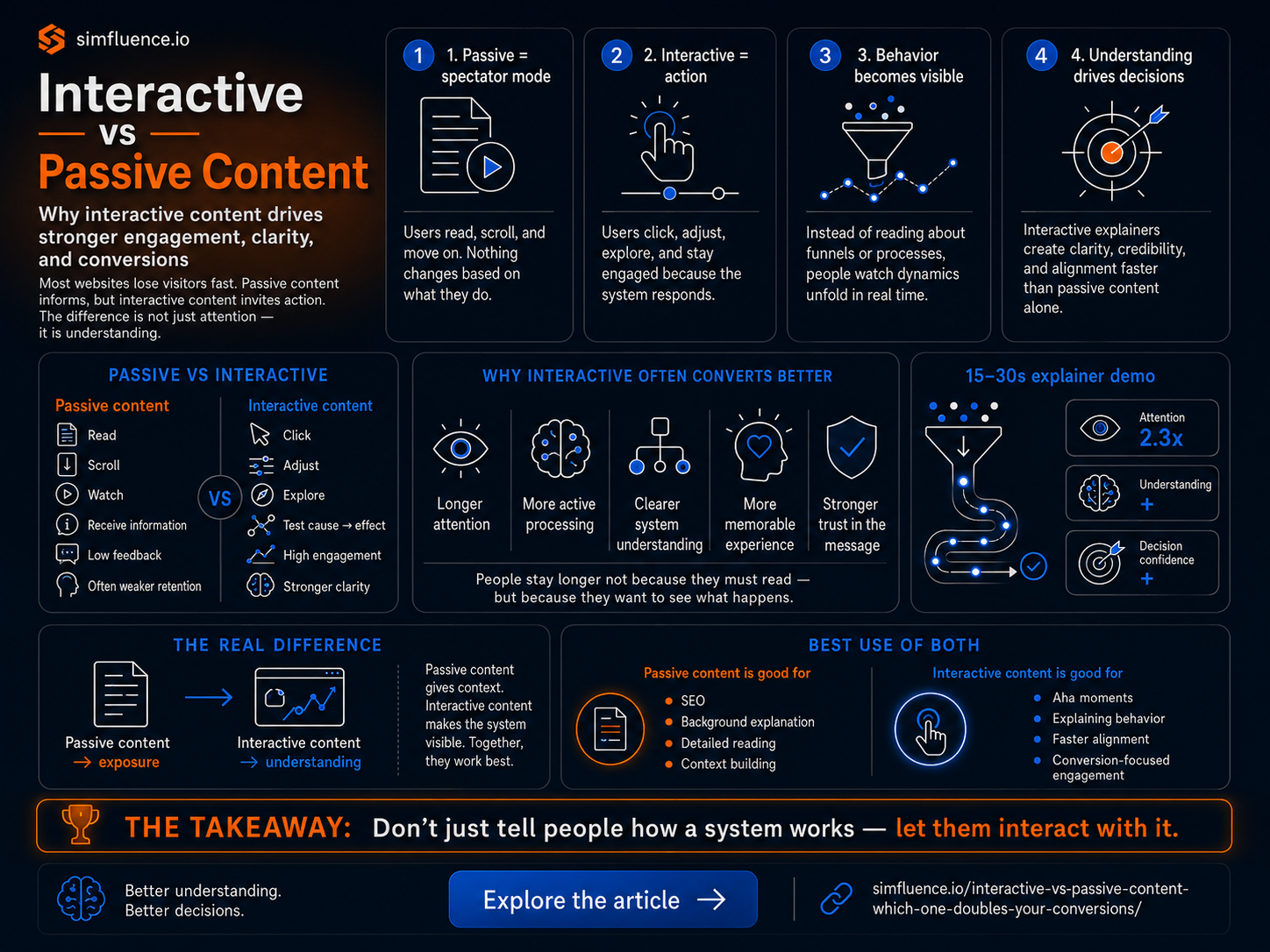
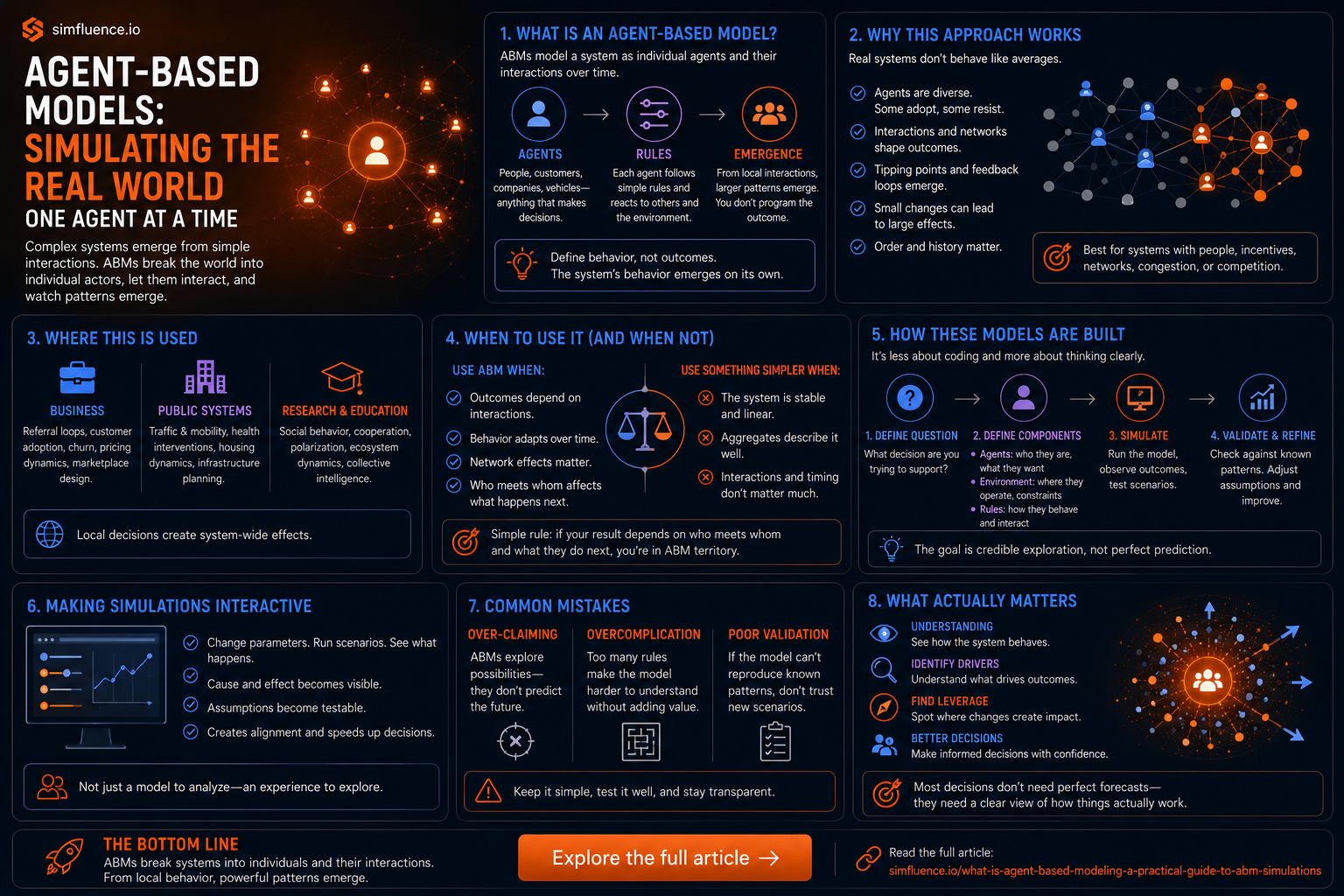
That is exactly why this topic is difficult to communicate. A written report can explain the concepts: bias, feedback loops, over-policing, transparency, accountability, and weak evidence of effectiveness. But these ideas often remain abstract. People may understand the words without grasping the mechanism. This is where interactive explainers and simulations become useful. A simulation can show how a forecasting system works, where risks enter the process, and how apparently neutral decisions can create long-term social effects.
The Crime Forecasting System Demo is built for that purpose: not to promote predictive policing as a ready-made solution, but to make its logic visible. It turns a sensitive and technical issue into an interactive public safety forecasting scenario, where users can see how synthetic data becomes risk scores, area rankings, patrol suggestions, and review points.
Why visual simulations help with sensitive topics
Predictive policing is sensitive because it sits at the intersection of public safety, civil liberties, institutional power, and social inequality. A purely technical explanation tends to understate these stakes. A purely moral critique may miss the operational logic that makes such systems attractive to public institutions. Simulations can sit between these two extremes.
A good simulation does three things.
First, it makes assumptions visible. Users can see that a risk score is not magic. It depends on inputs, weighting, population exposure, geography, time windows, and previous records. Once these assumptions are visible, they can be questioned.
Second, it makes trade-offs concrete. More targeted patrol allocation may look efficient in the short term, but it may also increase surveillance pressure in certain areas. A 48-hour forecast may help operational planning, but it does not answer whether repeated use produces fair outcomes over months or years.
Third, it slows down false certainty. Predictive systems often look authoritative because they produce clean numbers, maps, rankings, and recommendations. Simulations can interrupt this impression by showing uncertainty, review points, and possible failure modes. Instead of saying “this area is dangerous,” a better interface asks: what data produced this score, what assumptions are embedded in it, and what may happen if this recommendation is followed repeatedly?
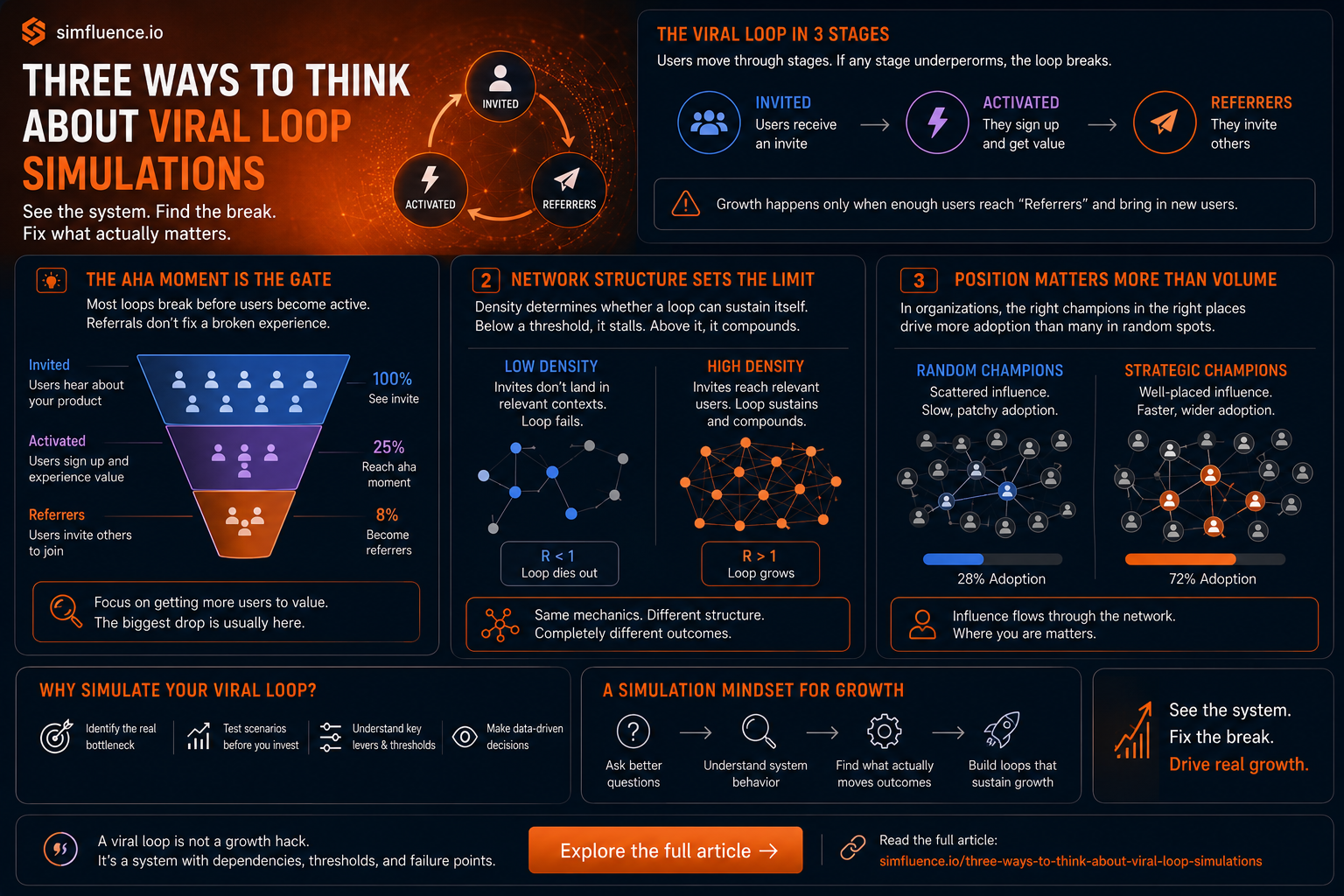
This is exactly the kind of value Simfluence can offer. It takes complex AI and data systems and turns them into explainable, testable scenarios. The goal is not to make the technology look harmless. The goal is to make the mechanism understandable enough that people can discuss it intelligently.
From research report to public understanding
Predictive policing should not be understood merely as a technological solution. It is a governance choice. That is a crucial distinction.
A technological solution asks: can we predict where incidents may occur?
A governance perspective asks harder questions: should this prediction be used for patrol allocation? Who audits the system? What data is included? What data is missing? Which communities carry the burden of false positives? What happens when increased police presence generates more recorded incidents? How can people challenge or understand decisions shaped by the system?
These questions are hard to answer through text alone. They become clearer when users can interact with a simplified model. A synthetic crime forecasting simulation allows students, policymakers, public sector teams, researchers, and citizens to explore the system without deploying it in the real world. That is the value of using a demo for a sensitive topic: it creates a safe space to examine unsafe assumptions.
The Simfluence Crime Forecasting System Demo can therefore be read as a bridge between research and public explanation. It takes the abstract concerns from predictive policing literature — bias, feedback loops, opacity, over-policing, accountability — and turns them into something visible. Users can see how a forecast becomes a patrol suggestion. They can inspect how area rankings may influence attention. They can reflect on why bias-aware review is not an optional add-on, but a core part of responsible system design.
The real lesson
The lesson is not that all forecasting tools are automatically illegitimate. The lesson is that public safety forecasting cannot be treated as a neutral optimization problem. Once a prediction influences patrols, inspections, interventions, or surveillance, it becomes part of the social system it claims to measure.
That is why sensitive AI systems need more than technical accuracy metrics. They need public explanation, institutional oversight, impact assessment, and critical simulation. They need tools that help people understand not just what the model predicts, but what the model does.
This is where Simfluence-style simulations are useful. They make hidden mechanisms visible. They turn passive reading into active exploration. They allow complex research findings to become understandable without stripping away the risks.
For predictive policing, that is essential. Because the core question is not only whether a system can forecast crime risk. The real question is what kind of society is produced when institutions start acting on those forecasts.
Explore the simulation here: https://simfluence.io/simulations/crime-forecasting-system-demo/