labor market • ai adoption • 5-year pause
How AI May Change Work
A short auto-run 20-second simulation showing one simple idea:
AI capability can move faster than company adoption.
As that gap plays out over 5 simulated years, users see how it may affect
job exposure, entry-level hiring, and broader work signals.
It is a simple demo, not a prediction.
step 1 — watch 5-year playback
step 2 — compare work signals
what AI could do
what companies use
affected jobs / exposure
work signals
what it shows
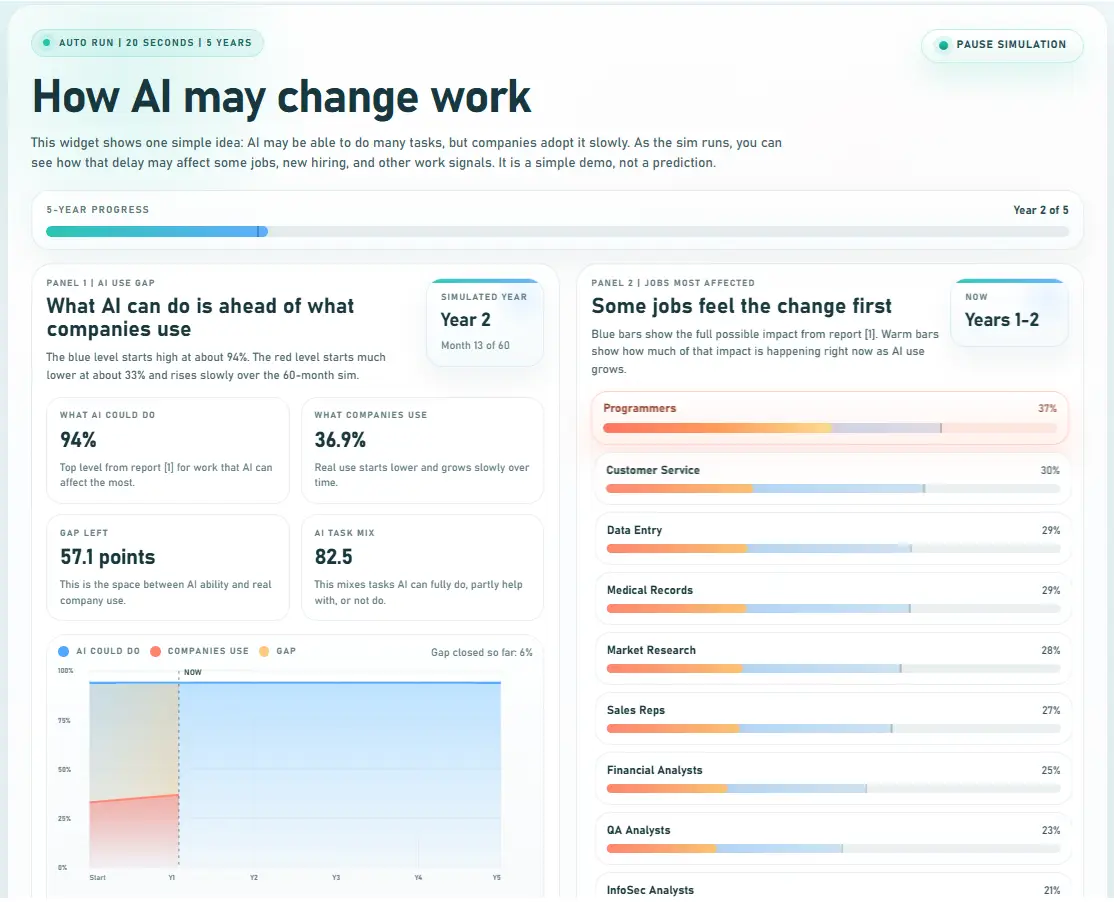
How AI capability starts far ahead of real company use, leaving a visible adoption gap that closes only slowly over time.
Which job groups may feel pressure first as actual AI use rises across the 5-year playback.
How entry-level hiring may weaken before big job losses become obvious, while unemployment stays relatively flat and noisy.
core scenes
panel 1:AI use gap over 60 months
panel 2:jobs most affected first
scene 4:worker groups and entry-level squeeze
panel 3:work signals like hiring and unemployment
timeline:Y1 to Y5 with pause-style progression
live outputs
AI use gap:distance between capability and adoption
affected jobs:current versus possible impact by role
entry-level pressure:openings soften before broader damage shows up
work signals:unemployment change, job loss risk, pay pressure, and new job growth
best for
AI strategy and future-of-work pages
thought leadership and research explainers
HR, hiring, and workforce planning decks
media pieces and viral simulation posts
AI adoption gap
future of work
labor market
job exposure
entry-level hiring
unemployment signals
5-year simulation
auto-run widget
workforce change
Anthropic-style explainer
This simulation turns a dense labor-market argument into a fast visual story:
AI may be able to do much more than companies actually deploy.
That lag matters because the first visible pressure may show up in
job exposure and entry-level hiring long before headline unemployment moves much.