long-term habit simulation • pause simulation • 6-month playback
The Doomscrolling Effect: Brainrot Habit Simulation
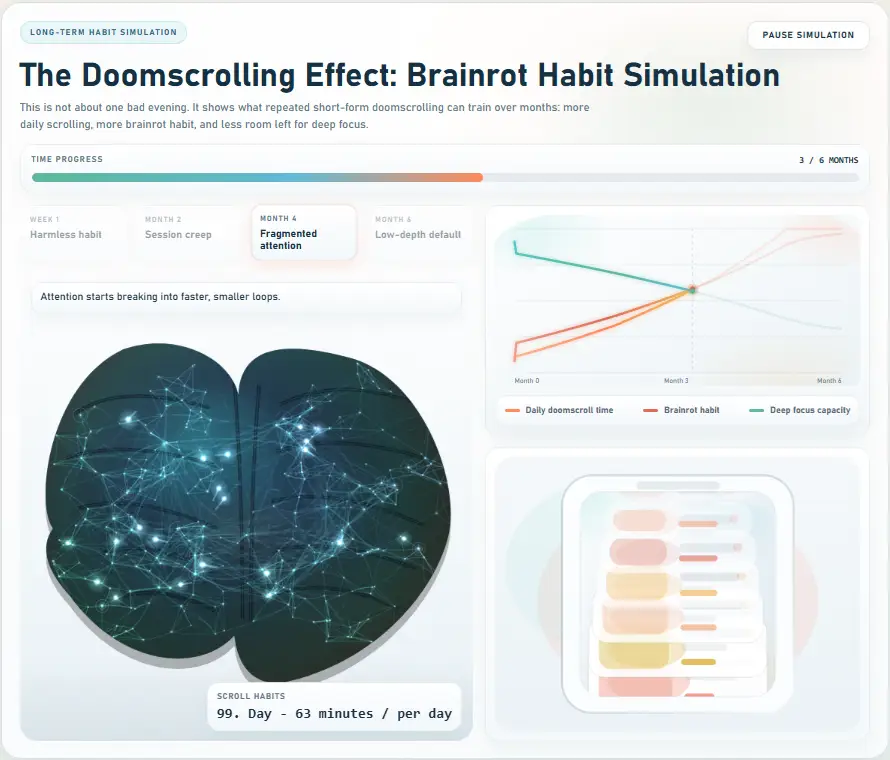
This is not about one bad evening. It shows how repeated short-form doomscrolling can
slowly train a new default over months: more daily scrolling, stronger brainrot habit,
and less room left for deep focus. The widget runs as a short pause-style simulation with
key moments explained along the timeline.
step 1 — watch 6-month playback
step 2 — pause at key habit stages
daily doomscroll time
brainrot habit
deep focus capacity
time progress
what it shows
How short-form scrolling time can creep upward over months, even when the habit starts off feeling harmless.
How repeated fast stimulation can build a brainrot-style habit loop that becomes easier to repeat and harder to interrupt.
How deep focus capacity can shrink gradually as the brain gets used to faster stimulation than depth can provide.
core scenes
week 1:harmless habit
month 2:session creep
month 4:fragmented attention
month 6:low-depth default
timeline:0 to 6 months with pause progression
live outputs
daily scroll habits:minutes spent in doomscroll mode each day
brainrot habit:reinforcement of the low-depth scrolling loop
deep focus capacity:remaining room for sustained attention and depth
stage message:short explanation of what the habit looks like at each pause moment
best for
digital wellbeing and attention economy pages
thought leadership and media explainers
education, parenting, and youth-awareness campaigns
viral simulation posts about habits and focus
doomscrolling
brainrot habit
attention fragmentation
deep focus
short-form video
habit drift
6-month simulation
pause simulation
digital wellbeing
attention economy
This simulation turns a familiar but fuzzy problem into a visible habit story:
repeated short-form scrolling does not just fill time — over months it can
train faster stimulation-seeking, strengthen the brainrot loop, and reduce capacity for depth.