simfluence • network template • contagion / diffusion simulation base
Network / Contagion / Diffusion Template
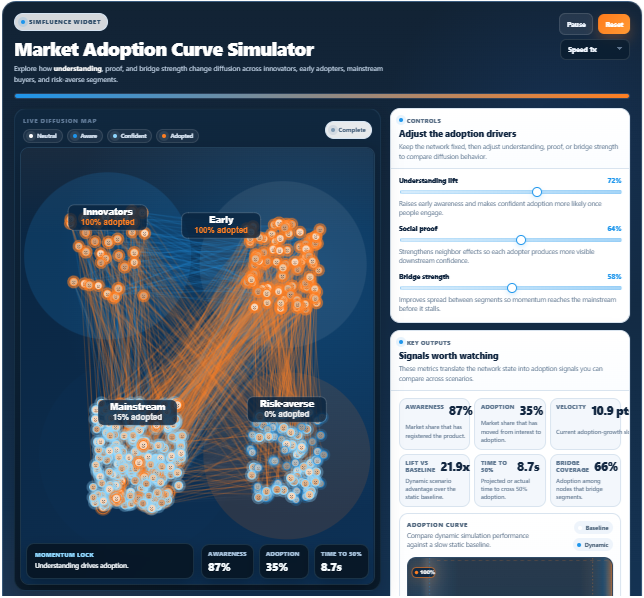
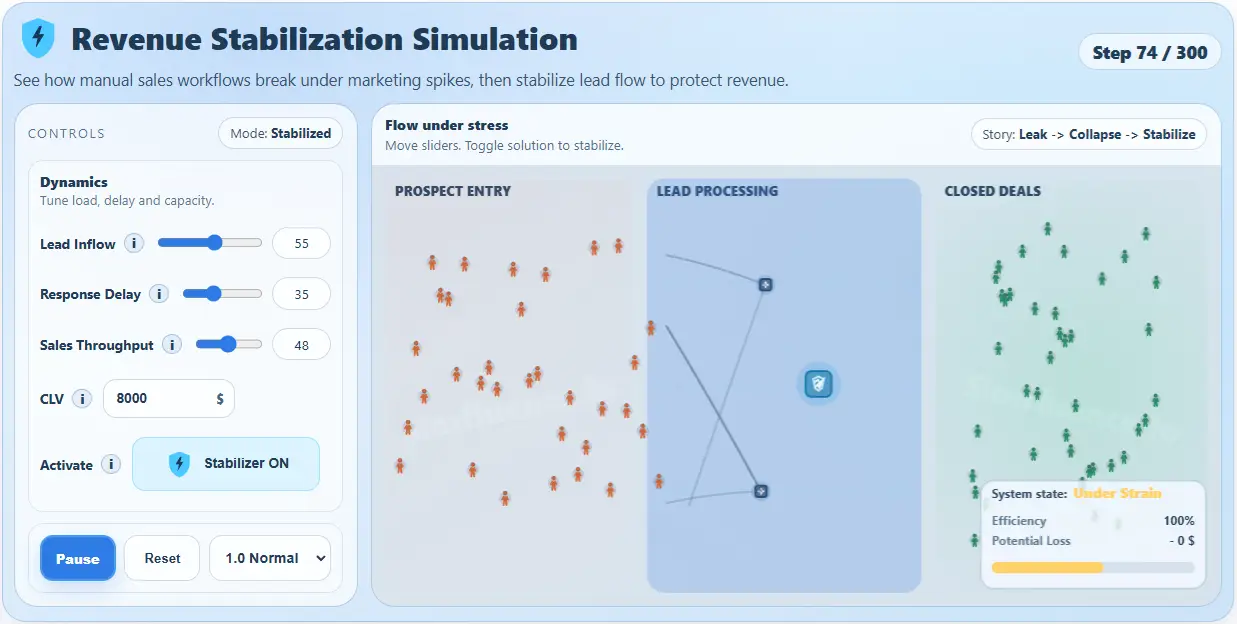
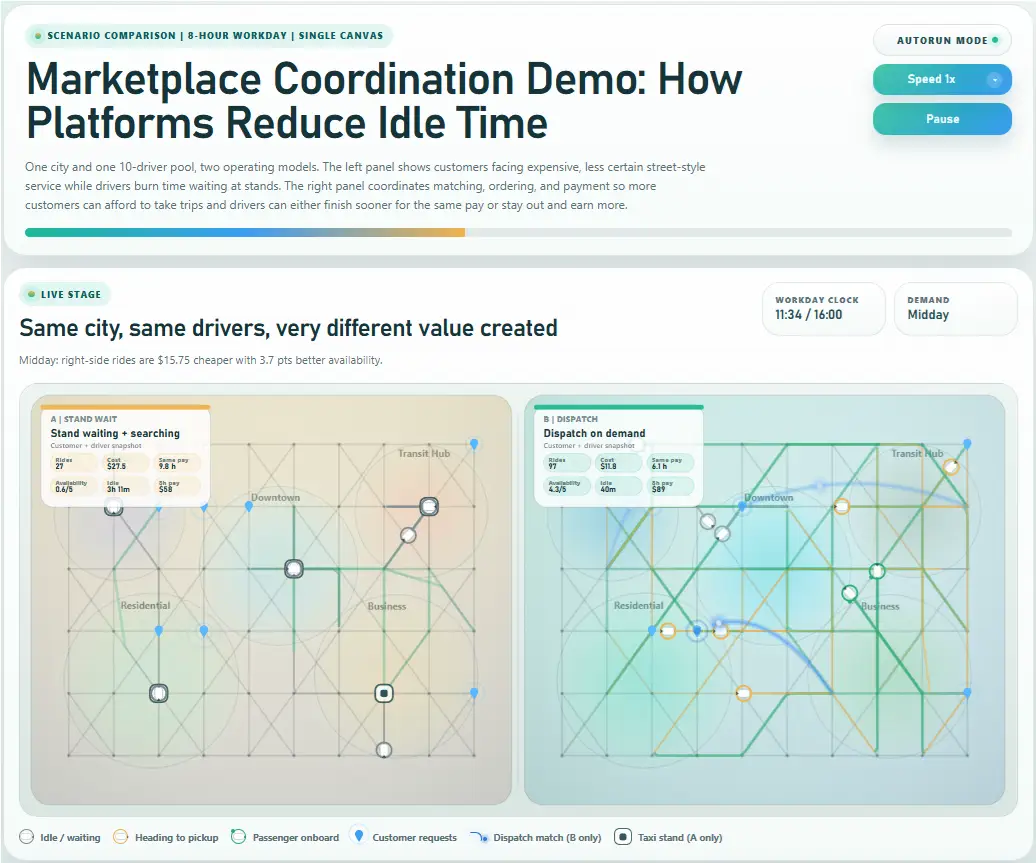
Use this base for linked systems where spread depends on connectivity and thresholds.
It fits adoption spread, contagion, referral loops, peer influence, cascading failures, information diffusion,
trust propagation, and other network effects where local connections shape global outcomes.
The template is built to make saturation, resistance, clustering, and tipping points easy to see.
seed the network and show first-order spread
reveal when connectivity turns spread self-reinforcing
network spread
threshold / resistance
cluster / regime state
live diffusion run
use cases
Best for linked systems where spread depends on connection structure, local exposure, and activation thresholds.
Fits adoption cascades, contagion models, viral referral loops, peer effects, failure propagation, and network-driven growth stories.
Strong when you need to explain how small local changes create slow spread, contained spread, or runaway cascade behavior.
how to use
1. seed the network:start with a small active frontier and watch first-order diffusion
2. tune topology and resistance:change density and resistance to reveal bottlenecks or tipping points
3. compare spread regimes:measure penetration velocity between slow, mid, and runaway cascade states
key outputs
reached:rename for adopted, infected, exposed, influenced, or activated nodes
active frontier:show the current edge of spread still pushing outward
penetration:track the share of the reachable network already reached
velocity:show how quickly spread advances between steps
bridge links:surface critical connectors that join otherwise separate regions
largest cluster:show concentration and reachable spread mass
controls
link density:adjust how connected the network is overall
transmission:set how strongly one active node can activate neighbors
resistance:control how hard it is for spread to cross thresholds
rule:keep the knobs limited so the network story stays causal and readable
network template
diffusion simulation
contagion model widget
adoption spread explainer
peer influence simulation
referral loop network
cascade dynamics
threshold spread model
network effects visualization
cluster and bridge analysis
This template is built to show one core network truth:
spread is not linear.
Below a threshold, diffusion stalls or stays local. Once enough nodes are reached and enough bridge paths open,
spread can become self-reinforcing and move into cascade territory.