simfluence • spatial template • queue / logistics simulation base
Spatial / Queue / Logistics Template
Use this base for physical flow systems where space and capacity interact.
It fits queues, bays, stations, service points, warehouses, yards, docks, checkout lines, loading zones,
and other congestion problems where layout, arrivals, service capacity, and movement rules shape delay and throughput.
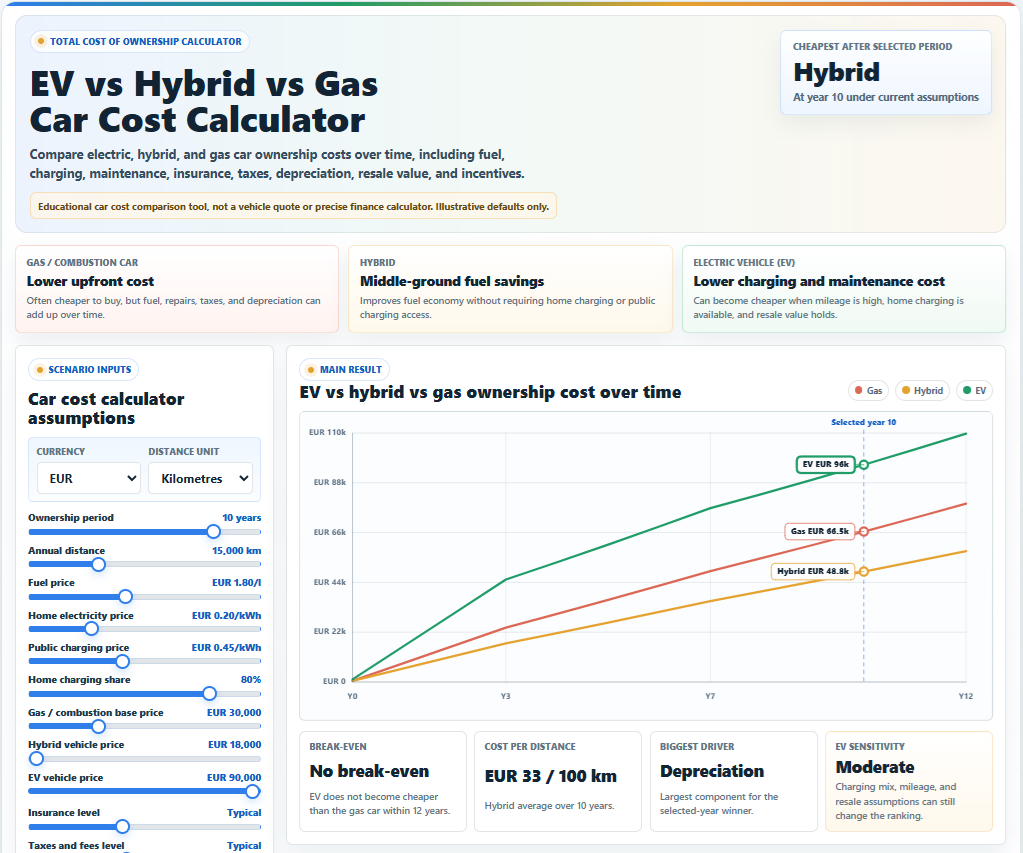
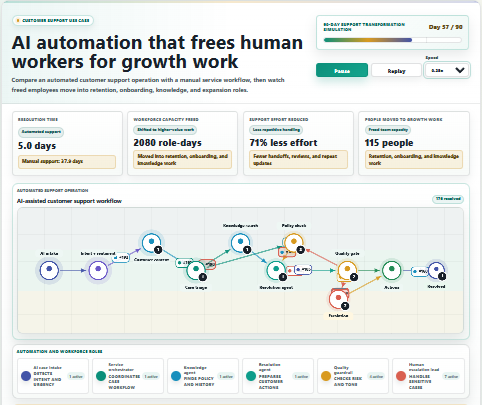
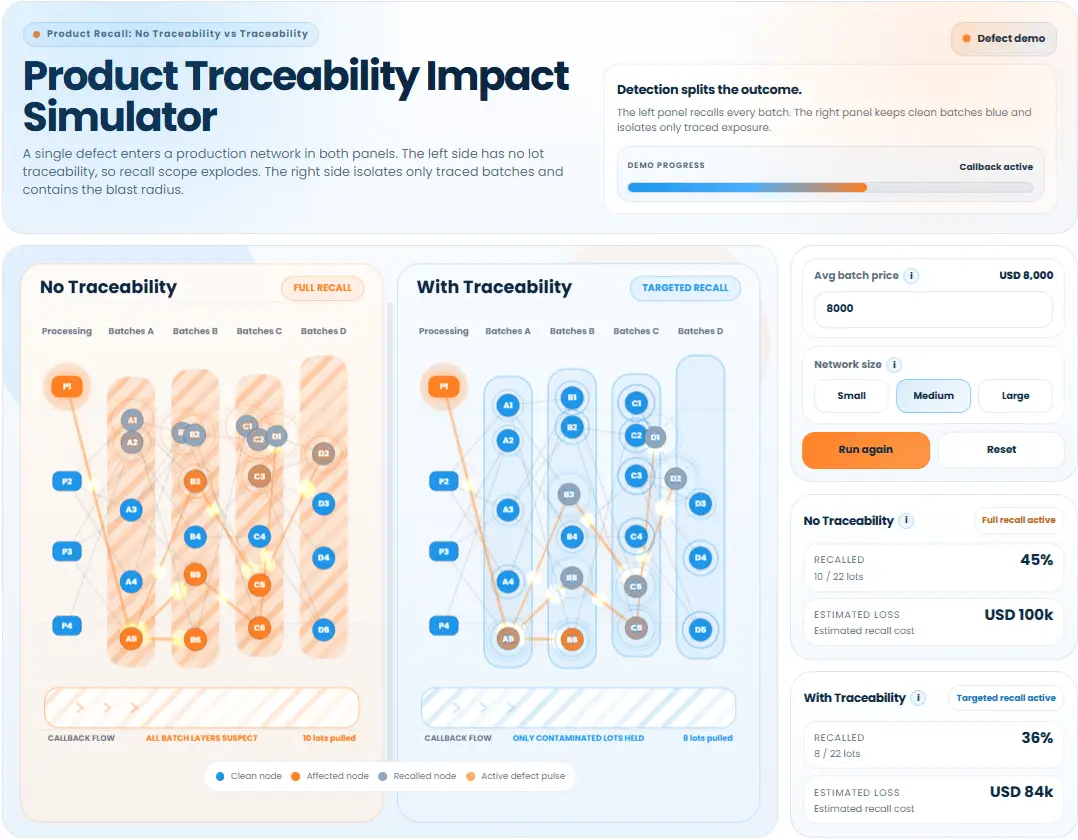
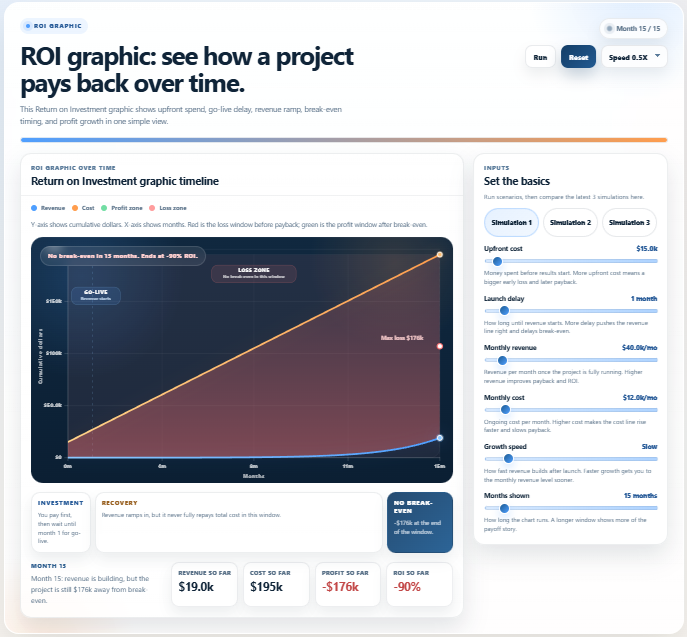
The template is built to make waiting, blocking, service pressure, and spatial bottlenecks visible fast.
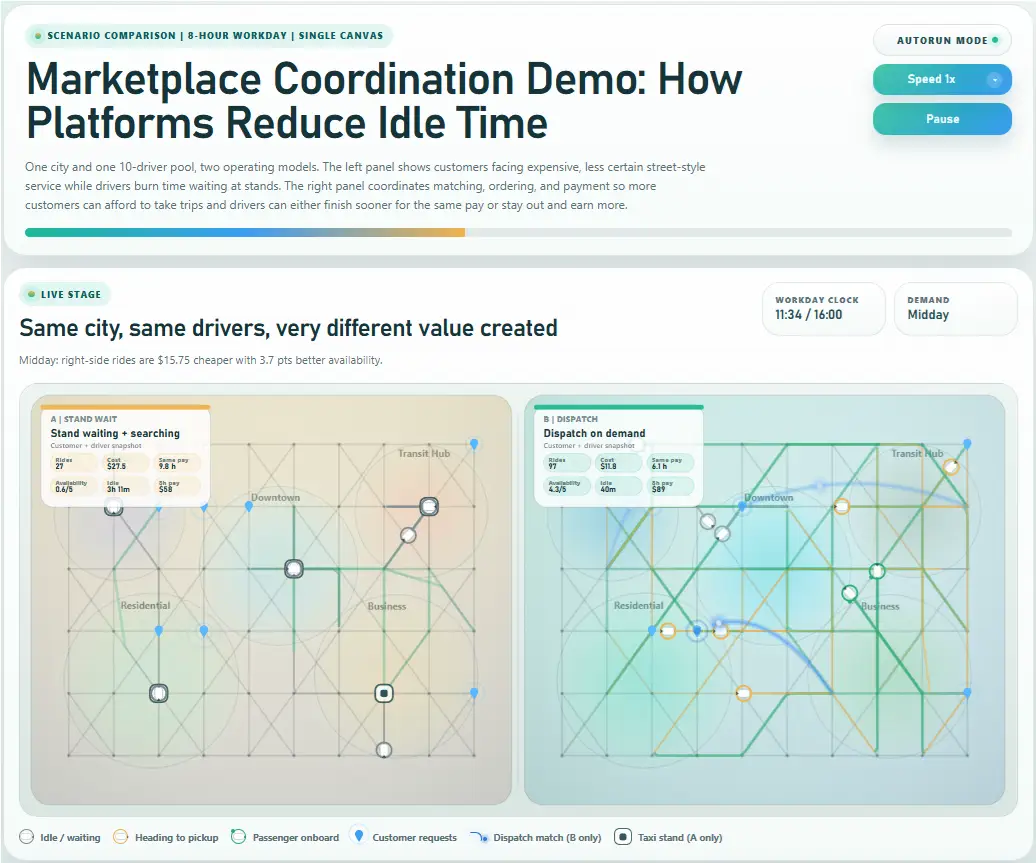
map waiting and service zones clearly
show how arrivals, capacity, and layout create congestion
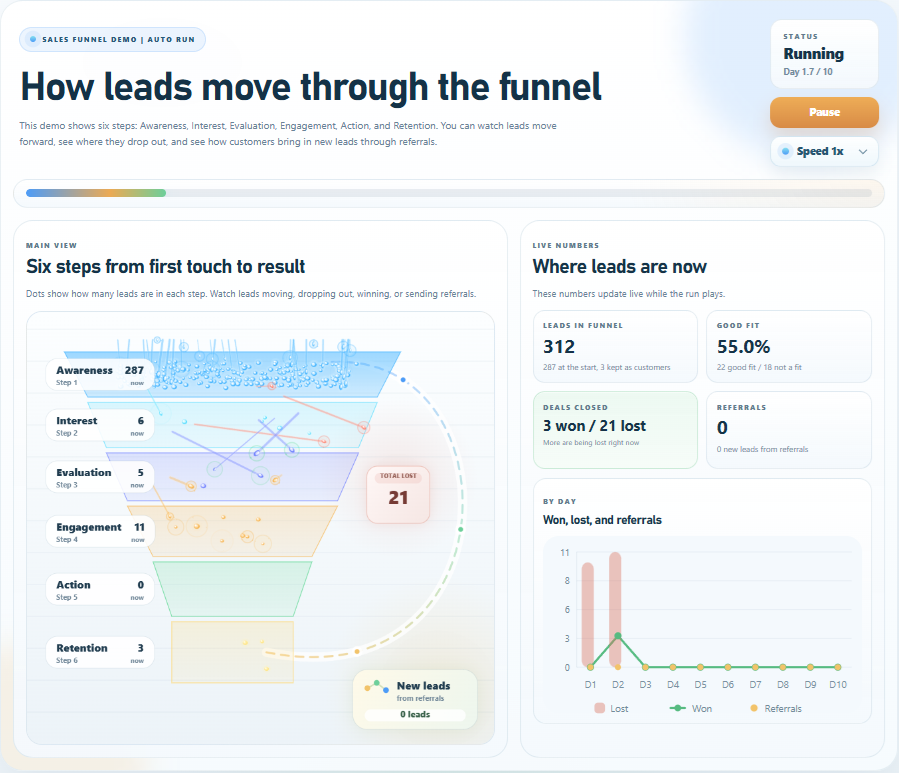
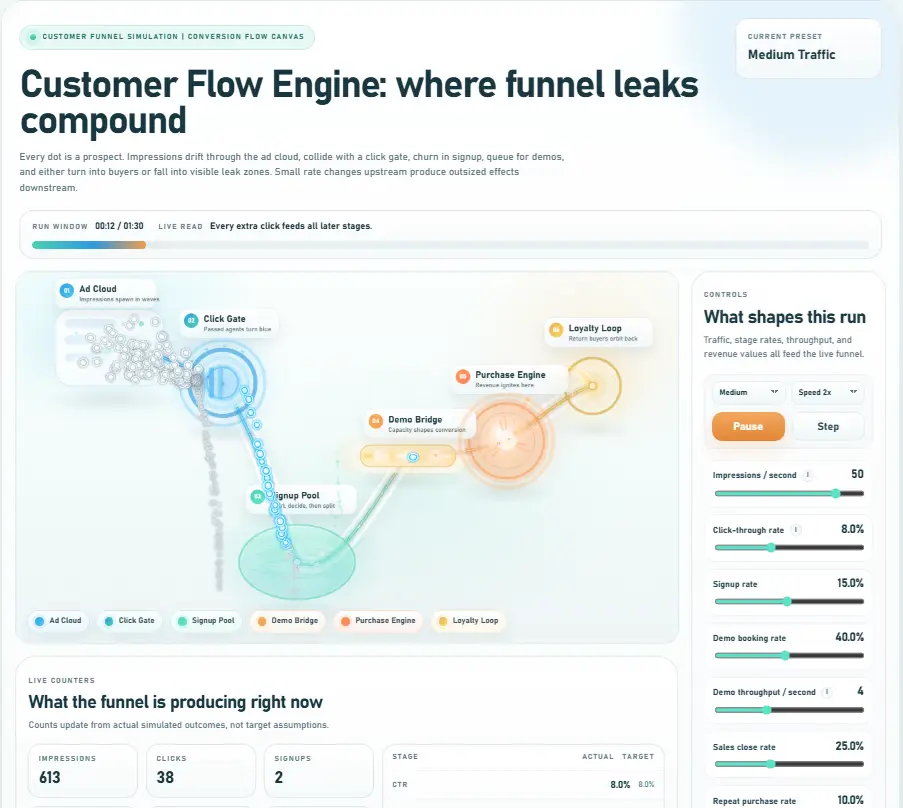
movement / queue flow
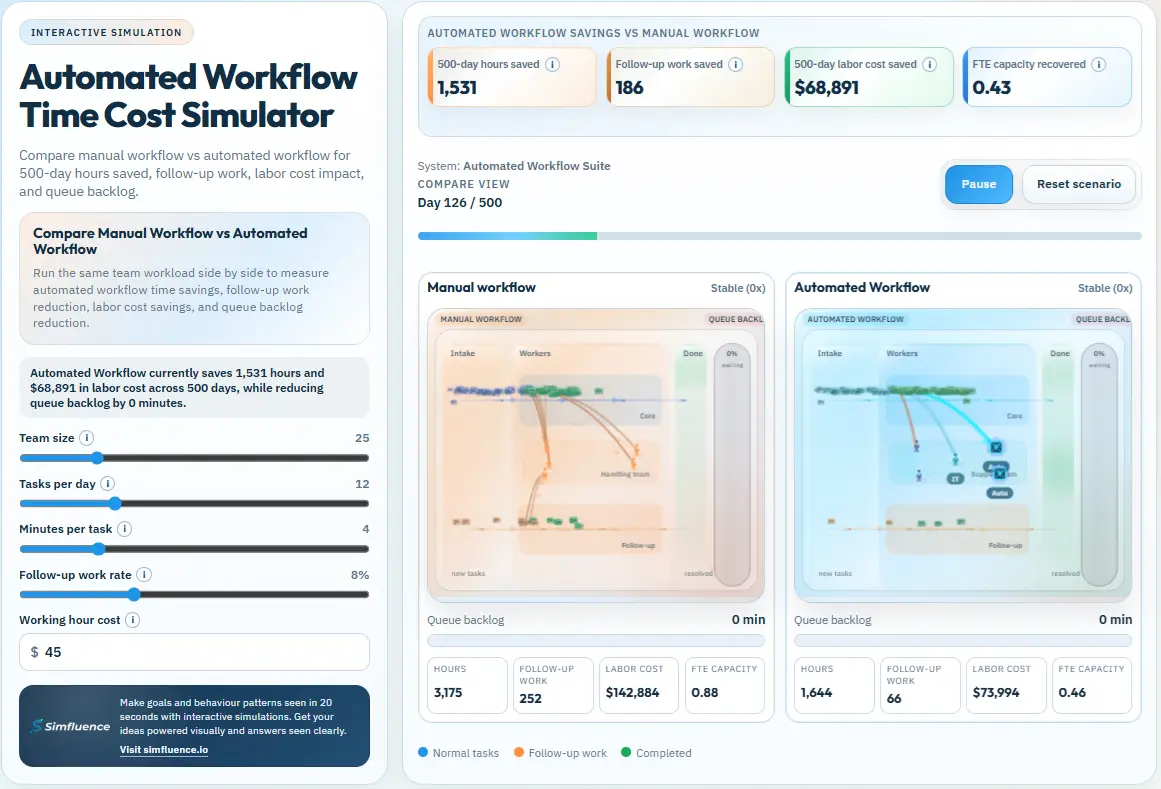
delay / blockage pressure
capacity / service state
live spatial run
use cases
Use this for physical flow systems where space, service points, and local congestion affect performance.
Fits queue systems, bay allocation, warehouse movement, dock flow, checkout lanes, station handling, and real-world service congestion stories.
Best when you need to explain how small layout or capacity changes can sharply alter delay buildup and throughput outcomes.
how to use
1. map queue locations:place waiting and service zones where congestion can be seen clearly
2. stress capacity vs arrivals:push arrival and service rates to expose bottlenecks in real time
3. test layout changes:adjust layout efficiency to compare delay and throughput outcomes
key outputs
queue size:show waiting units, waiting vehicles, waiting people, or queued tasks
throughput:track completed service, processed units, or departures over time
utilization:show how fully service points, bays, or staff capacity are being used
delay:surface waiting time or accumulated service lag
busy bays:show active service points, occupied stations, or blocked resources
exiting:track completed exits, departures, or cleared units
controls
arrival rate:set how much new demand enters the physical system
service capacity:adjust the number or strength of active service resources
layout efficiency:change how easily movement and service access can happen in space
rule:keep changes simple so the spatial cause-effect relationship stays visible
spatial template
queue simulation
logistics flow widget
warehouse congestion model
dock and bay simulation
service point queue analysis
physical bottleneck visualization
arrival vs capacity model
layout efficiency simulation
delay and throughput explainer
This template is built to show one core spatial truth:
congestion is often nonlinear.
When arrivals, capacity, and layout fall out of balance, delay can accumulate quickly.
Small adjustments in service strength or spatial efficiency can produce outsized improvements in flow.