Agri-tech Simulation Template: Plant Yield & Quality Simulator
Adjust water, nutrients, and growing conditions to see how plant condition, quality, size mix, and final yield change across the season in one clear interactive simulation.
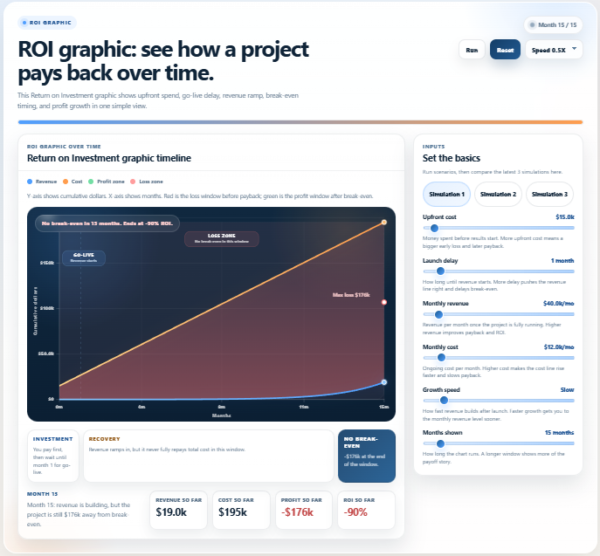
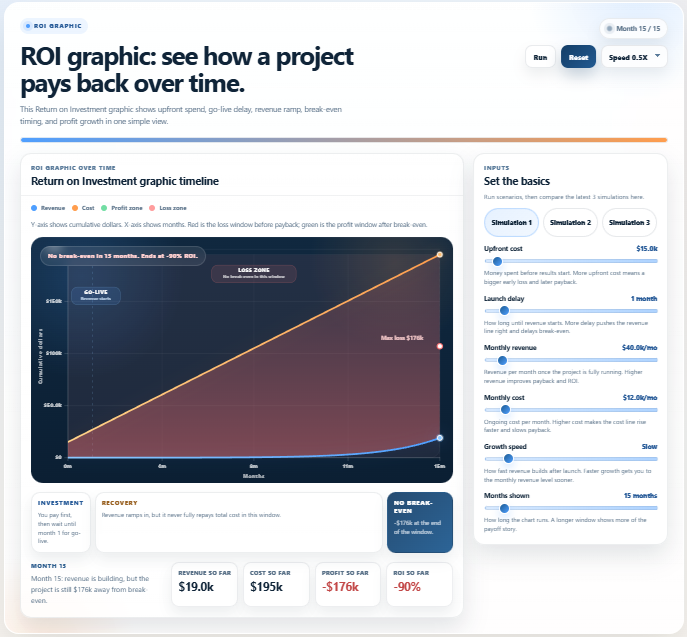
An interactive ROI calculator that shows how a project pays back over time. See upfront cost, launch delay, revenue ramp, break-even timing, and profit growth in one simple view. The simulation makes return on investment over time easier to understand than a static chart. Based on common ROI content patterns, “ROI,” “return on investment,” “break-even,” and “ROI over time” match the clearest search intent for this page.
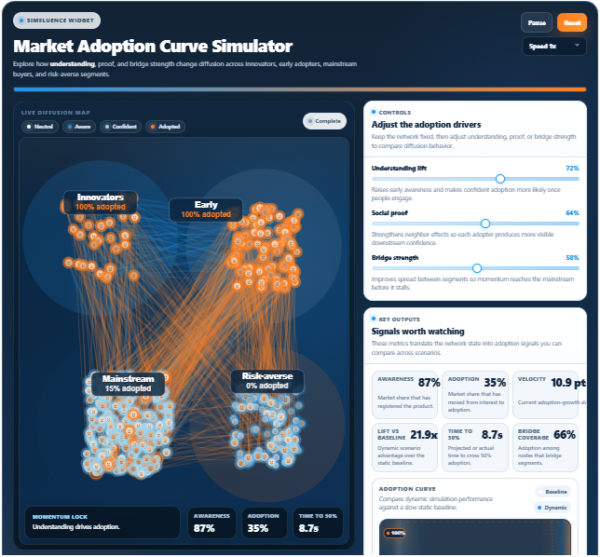
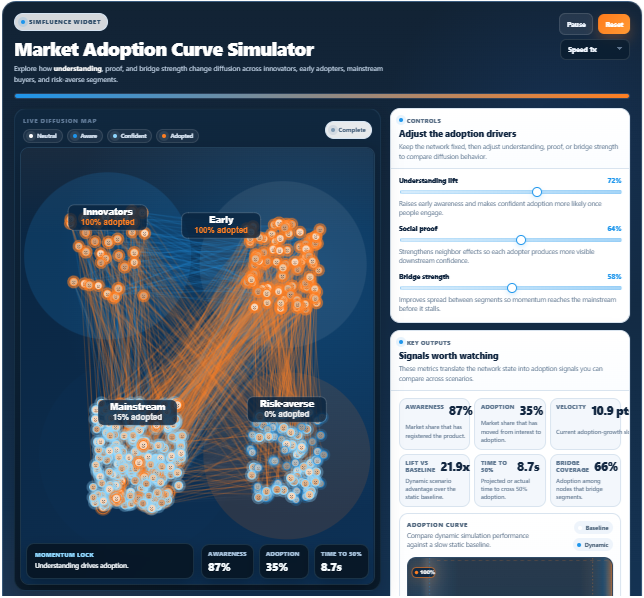
Product adoption curve simulator that models how understanding, social proof, and bridge strength shape diffusion across innovators, early adopters, mainstream users, and risk-averse segments.
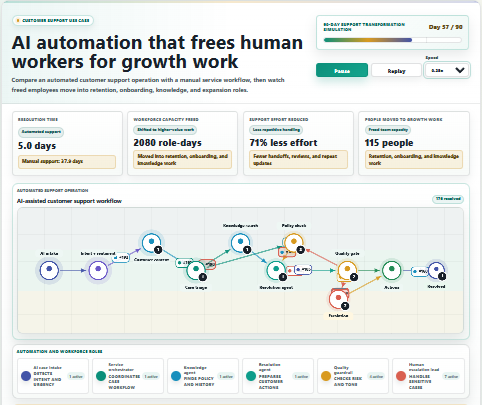
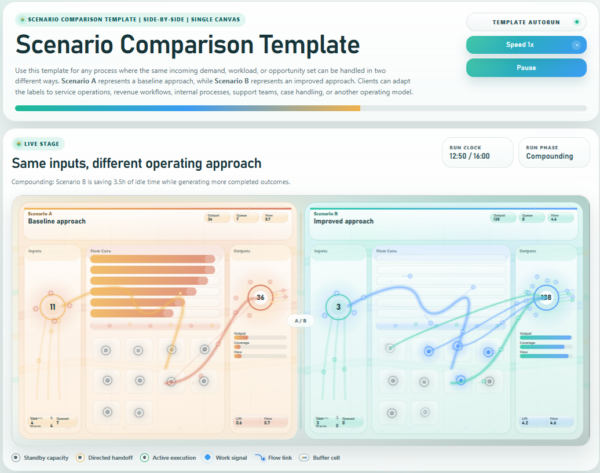
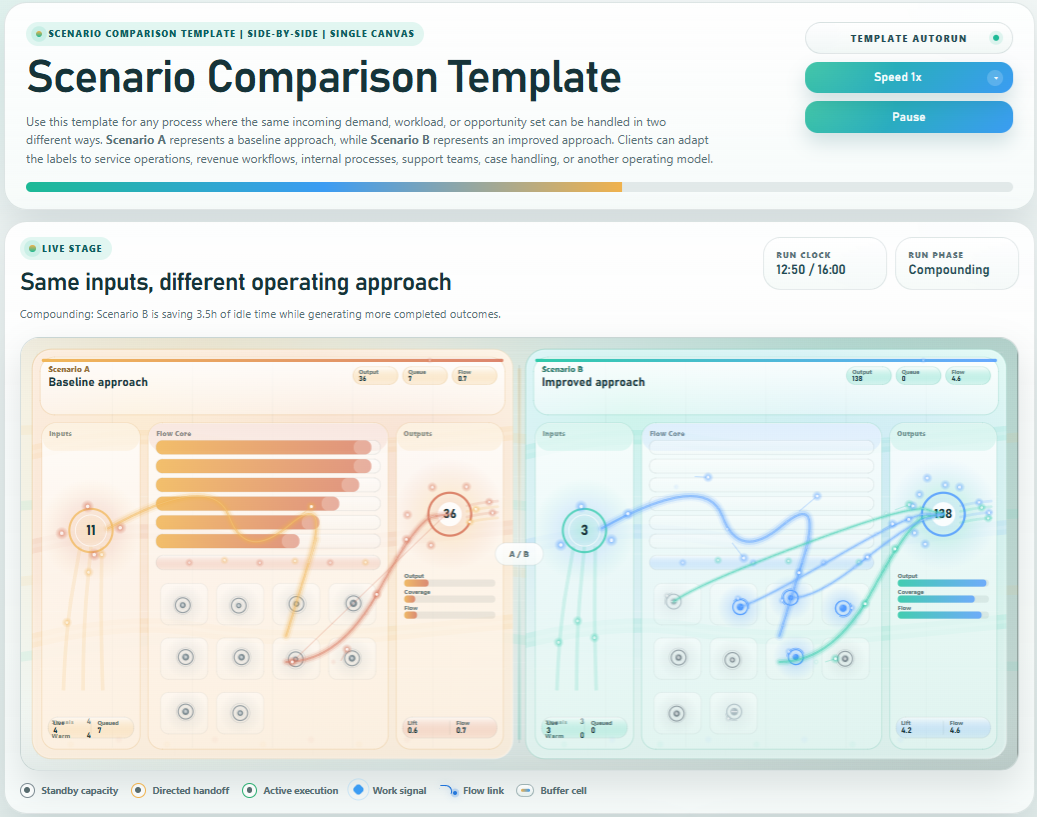
A reusable side-by-side simulation template that shows how the same inputs produce different results under a baseline versus improved operating approach. Use it to explain workflow redesign, automation, routing, prioritization, or process improvement across service operations, support, revenue workflows, case handling, and internal processes.
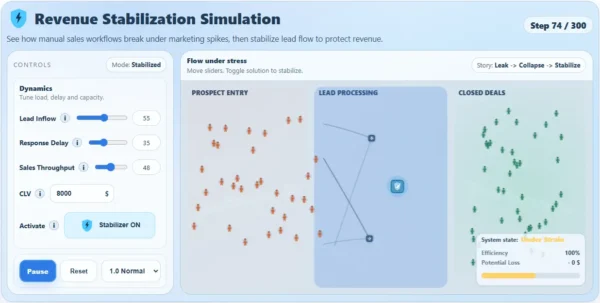
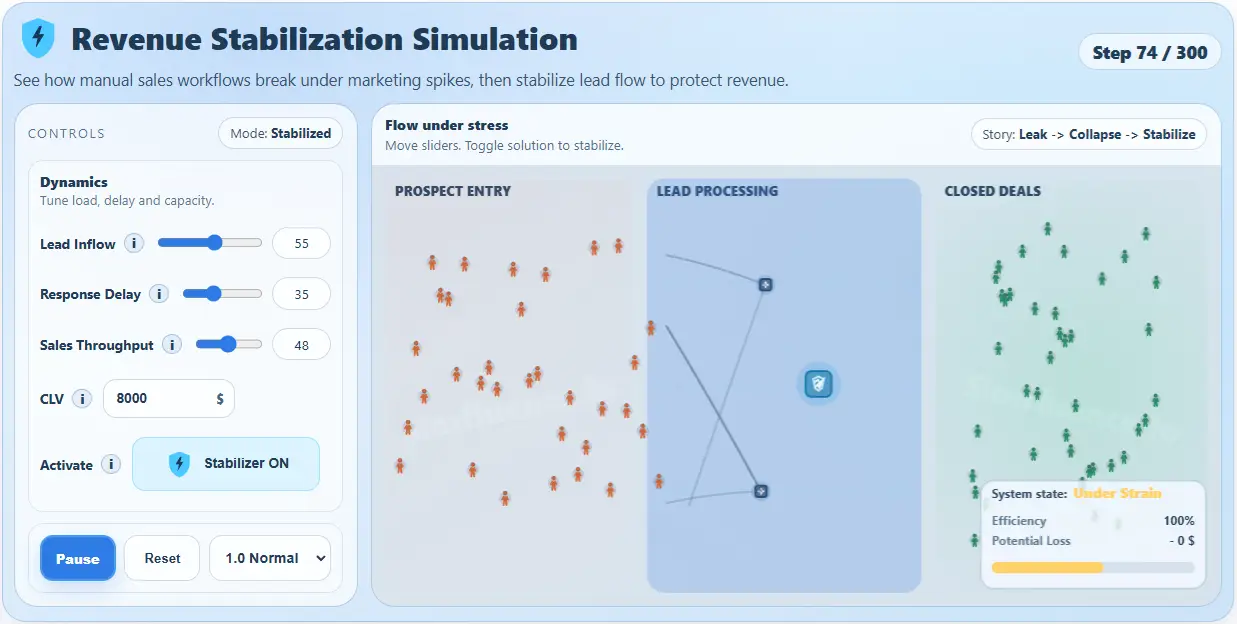
Make revenue leakage visible in under 20 seconds. This interactive widget shows how manual sales workflows collapse under inbound spikes — and how FlowGuard AI stabilises lead flow with fast routing, instant booking, and smarter qualification.
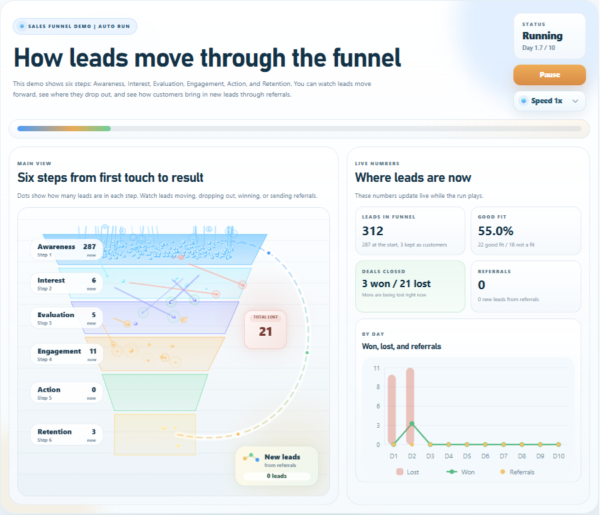
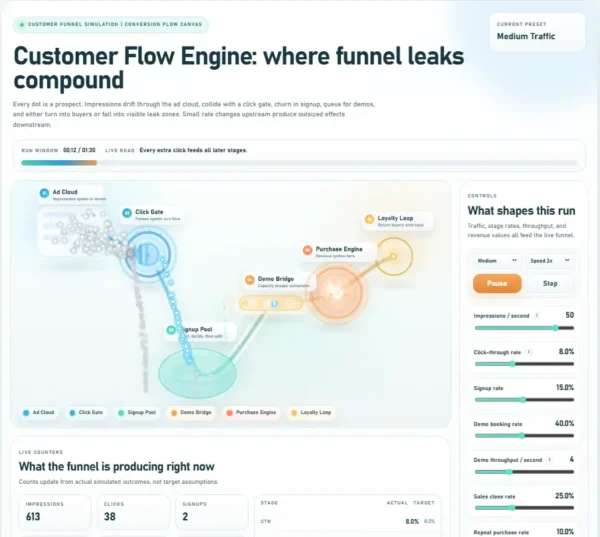
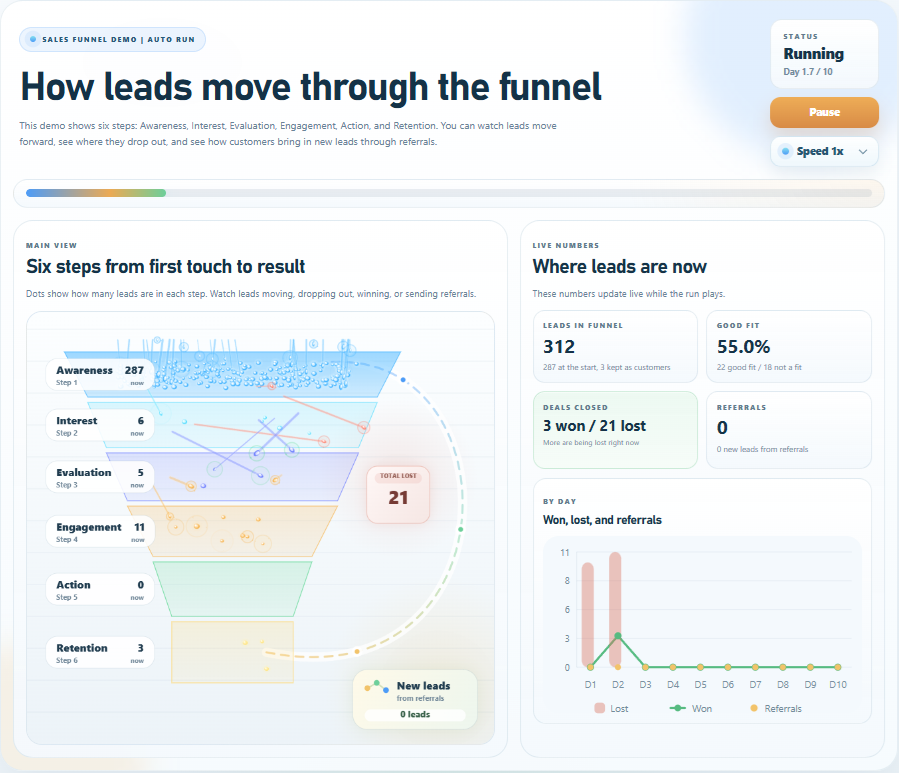
Explore Sales Funnel Stages in live simulation. Watch how leads move through sales funnel process steps and optimize your sales funnel management accordingly.
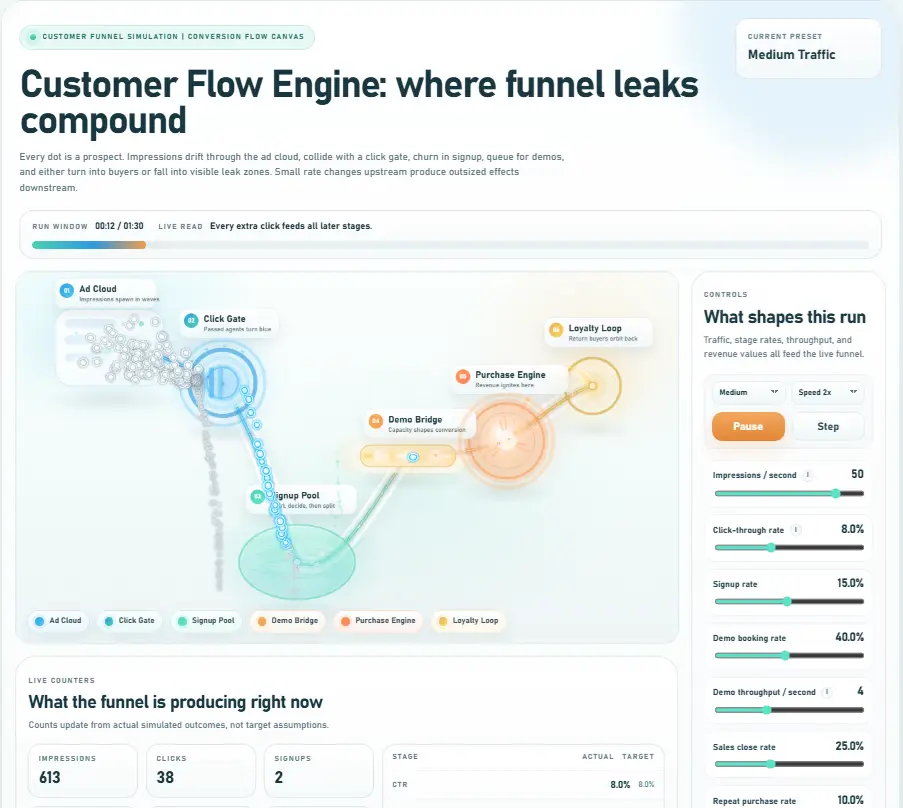
Customer flow models visualize how people enter a system, progress through stages such as awareness, sign-up or purchase, and eventually convert or drop off. By simulating these dynamics, organizations can identify bottlenecks, friction points and conversion opportunities across the customer journey.
One city and one 10-driver pool, two operating models. The left panel shows customers facing expensive, less certain street-style service while drivers burn time waiting at stands. The right panel coordinates matching, ordering, and payment so more customers can afford to take trips and drivers can either finish sooner for the same pay or stay out and earn more.
This is not about one bad evening. It shows what repeated short-form doomscrolling can train over months: more daily scrolling, more brainrot habit, and less room left for deep focus.
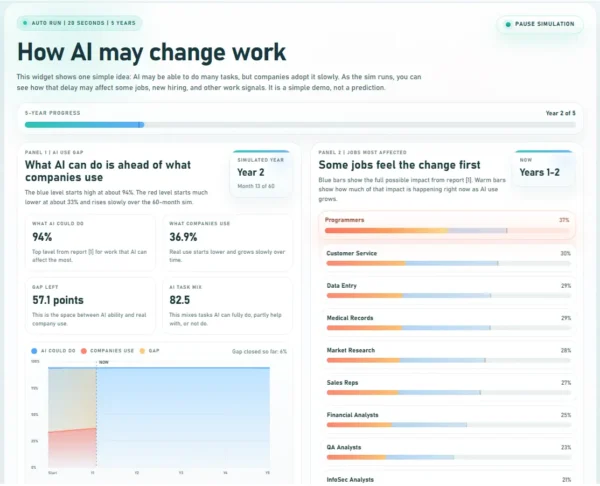
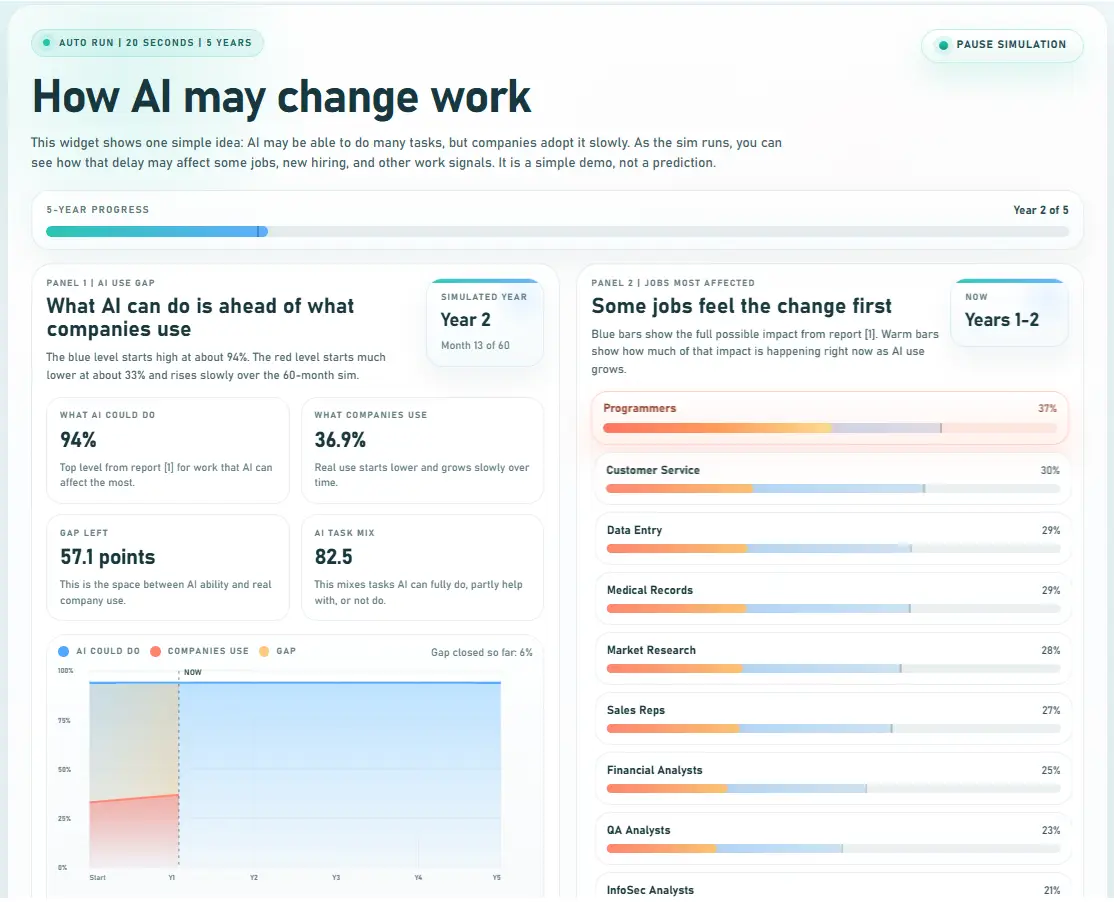
This widget shows one simple idea: AI may be able to do many tasks, but companies adopt it slowly. As the sim runs, you can see how that delay may affect some jobs, new hiring, and other work signals. It is a simple demo, not a prediction.